

 By Collins Sarkodieh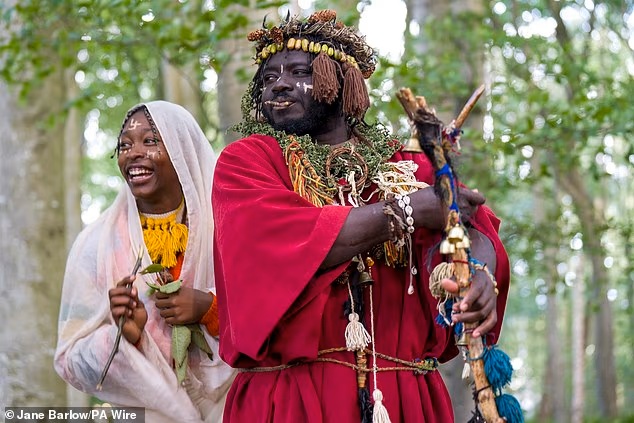
Kofi Offeh, a Ghanaian national known globally as “King Atehene of Kubala,” has been officially deported from the United Kingdom following a protracted legal battle and a high-profile standoff in the Scottish Borders. The UK Home Office confirmed his removal after he and his associates refused to vacate an unauthorized encampment near Jedburgh, leading to a joint police and immigration operation.
The saga of the “Kingdom of Kubala” began in early 2025 when Offeh, alongside a Zimbabwean and an American associate, occupied woodland in Scotland claiming ancestral rights to the territory. Their refusal to recognize the jurisdiction of the Scottish courts or local authorities turned a simple land dispute into an international spectacle fueled by viral TikTok and Facebook livestreams. After multiple evictions and a final arrest in October 2025, Offeh was recently filmed arriving at Kotoka International Airport in Accra, marking the definitive end of his self-styled Scottish monarchy.
Who is Kofi Offeh and what was the ‘Kingdom of Kubala’?
Kofi Offeh is a Ghanaian citizen who rose to internet fame by declaring himself “King Atehene,” the sovereign ruler of a self-styled micro-nation he named the Kingdom of Kubala. The group claimed that the land they occupied in the Scottish Borders was territory taken from their ancestors centuries ago, though they provided no verifiable legal or historical evidence to support this in court.
The group’s encampment near Jedburgh was far from a traditional diplomatic mission; it was a collection of makeshift structures and tents that disrupted the local community for months. Despite their “sovereign” claims, UK authorities treated the matter as a criminal trespass and immigration violation. The Kingdom of Kubala gained a massive following online, where supporters watched the trio challenge police officers and court bailiffs in real-time, often using pseudo-legal arguments to justify their presence on private land.
Why did the standoff in the Scottish Borders lead to deportation?
The standoff escalated because the group repeatedly ignored lawful eviction orders and refused to recognize the authority of the Scottish judicial system. This defiance forced the hand of local landowners and the Home Office, leading to a coordinated operation involving police and immigration officials to clear the site and detain the individuals.
Under UK immigration law, non-nationals who engage in persistent criminal activity or who remain in the country without valid leave are subject to deportation. Offeh’s activities, which included unauthorized encampments and a failure to comply with court mandates, made him a priority for removal. The final eviction in October was the culmination of nearly a year of tension, during which the local Jedburgh community reported significant disruption and confusion regarding the group’s legal status.
How did social media influence the King Atehene saga?
Social media acted as the primary propaganda tool for King Atehene, allowing him to bypass traditional news outlets and speak directly to a global audience of tens of thousands. Platforms like TikTok and Facebook were used to livestream the group’s “defense” of their camp, creating a narrative of resistance that resonated with some but drew widespread criticism from others.
This digital footprint made the case unique for UK authorities, who had to manage not just a physical eviction but a public relations battle. The viral nature of the handcuffed arrest in October served as a stark contrast to the regal image Offeh attempted to project online. By the time of his deportation, the digital “Kingdom” had become more of a cautionary tale about the limits of online influence when faced with the physical reality of international border laws and property rights.
What has King Atehene said since returning to Ghana?
Upon his arrival at Kotoka International Airport, Kofi Offeh remained defiant, declaring in interviews that he intends to establish his “throne” in Ghana and expand the Kingdom of Kubala. He made bold claims that political leaders, traditional chiefs, and even the police would eventually serve under his self-styled authority.
Offeh has specifically mentioned Sunyani as a strategic location for his new base of operations, raising eyebrows among local authorities and traditional leaders in the Bono Region. His statements—”Everywhere I land, I take dominion”—have been met with a mix of amusement and concern on Ghanaian social media. While his UK kingdom has been dismantled, Offeh appears determined to restart his movement on home soil, though he faces a very different legal and traditional landscape in Ghana.
What was the reaction of the Jedburgh community to the deportation?
Local officials and residents in Jedburgh have expressed profound relief following the confirmation of Offeh’s removal from the country. A local councillor noted that the presence of the unauthorized encampment had been a source of constant tension, as the group’s activities disrupted the peace and local land use.
The community had been stuck in a legal limbo for months, watching as the group moved from one hillside to another to avoid total eviction. The confirmation of the deportation by the Home Office provides a sense of finality for the Scottish Borders. Residents who previously had to deal with the influx of curious social media followers and the legal drama surrounding the woods can now return to their normal routines without the shadow of a self-styled monarch in their backyard.
What are the legal implications of ‘claiming territory’ in the UK?
In the United Kingdom, land ownership is strictly governed by the Land Registry and statutory law; “sovereign” claims based on unverified ancestral history hold no weight in modern courts. Anyone attempting to establish a micro-nation on private or public land without title is legally classified as a squatter or trespasser.
The King Atehene case serves as a legal precedent for how the UK handles “sovereign citizen” style movements that attempt to circumvent immigration and property laws. While the group claimed they were “reclaiming” land, the courts found that they had no legal basis for their stay. This led to the inevitable conclusion: once the legal protections of the court were exhausted, the immigration status of the participants became the primary mechanism for resolving the disruption.
Factual Insights on the Kubala Case:
- Initial Eviction: The group was first removed from their hillside site in July 2025 before relocating nearby.
- October Operation: The final removal involved a joint force of police, immigration officers, and court bailiffs.
- Follower Count: At its peak, the Kingdom of Kubala’s social media accounts reached over 50,000 followers.
- Home Office Protocol: Deportation typically follows a period of detention after a failed legal appeal regarding immigration status.
- Sunyani Strategy: Offeh has targeted Sunyani for his “re-establishment” due to its central location in Ghana.
- Due Process: The UK Home Office confirmed that all removals followed established legal and human rights protocols.
- Micro-nation Trends: Micro-nations (like Sealand or Kubala) are rarely recognized by any sovereign state or international body.
Why is Sunyani significant in King Atehene’s new plans?
King Atehene has described Sunyani as a “strategic location” for his ambitions to take dominion over Ghana. As the capital of the Bono Region, Sunyani serves as a major hub between the southern and northern parts of the country, potentially offering a symbolic center for his envisioned kingdom.
However, Ghana’s traditional chieftaincy system is deeply entrenched and constitutionally protected. For Offeh to claim that “chiefs will bow” before him is a direct challenge to the existing traditional authorities in the Bono area. Local analysts suggest that while he may attract curious onlookers, his chances of establishing a recognized “throne” are virtually zero given the strength of the existing traditional councils and the centralized power of the Ghanaian state.
How does this case affect the reputation of Ghanaians in the UK?
While the King Atehene saga was highly visible, it is largely viewed as an isolated incident involving a few individuals rather than a reflection of the broader Ghanaian diaspora in the UK. The Ghanaian community in Britain is one of the most well-integrated and respected immigrant groups, known for contributions to healthcare, law, and business.
Most observers recognize the Kingdom of Kubala as a fringe movement driven by a specific set of controversial beliefs. However, high-profile deportations often spark conversations about immigration enforcement. The “logic” of the Home Office in this case was focused on the specific illegalities of the encampment and the expiration of legal residency, rather than any broader targeting of specific nationalities.
What happens next for Kofi Offeh in Ghana?
Now that he is back in Accra, Kofi Offeh faces the challenge of turning his viral fame into a sustainable movement, which is unlikely given the skepticism of the Ghanaian public. While he continues to post videos and give interviews, he is no longer under the protection of the “woodland sanctuary” he had in Scotland.
The Ghanaian authorities have not yet indicated that they will take action against him for his statements, provided they remain within the bounds of free speech. However, if he attempts to seize land or disrupt local communities in Sunyani as he did in Jedburgh, he will likely find that the Ghana Police Service is just as firm as the Scottish authorities. For now, “King Atehene” remains a king without a kingdom, navigating the reality of life after the collapse of his Scottish dream.
Whether this is the end of the Kingdom or just a change in geography, the case highlights the enduring power of digital narratives and the inevitable consequences of challenging state authority on the ground. For the people of Scotland and Ghana, the “King” has returned home, and the “Kingdom” remains a digital ghost in the archives of TikTok.
Do you think the UK Home Office was right to deport King Atehene for his self-styled kingdom, or should his claims of ancestral land rights have been given more weight in the Scottish courts?