

 By Collins Sarkodieh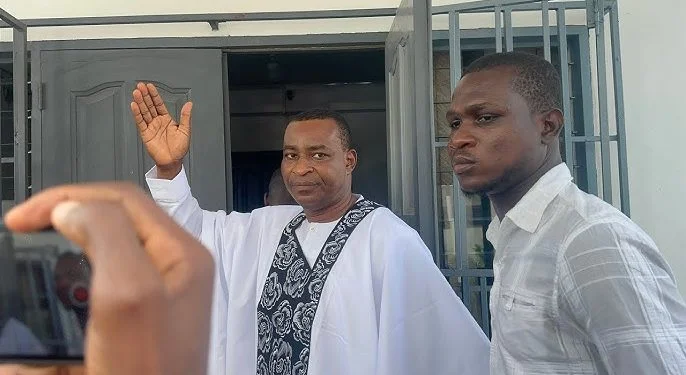
A former General Manager of Akonta Mining has testified in the High Court that Bernard Antwi Boasiako, widely known as Chairman Wontumi, personally directed mining operations within the Tano Nimiri Forest Reserve despite lacking the necessary legal permits. The witness, Edward Akwasi Ekuoko, revealed that when he questioned the legality of the move, Wontumi claimed to have received “verbal authorization” through a conversation with the then Lands and Natural Resources Minister.
This testimony marks a critical turning point in the high-profile prosecution of Chairman Wontumi, Akonta Mining Company Limited, and other executives. The group faces multiple charges, including undertaking mining activities in a forest reserve without a license and the unauthorized felling of trees. While the accused have pleaded not guilty and are currently on bail, the detailed evidence-in-chief provided on April 30, 2026, paints a stark picture of “brazen” environmental law violations.
Did Chairman Wontumi knowingly order mining without a permit?
According to the prosecution’s first witness, Chairman Wontumi explicitly instructed his team to move equipment into the Tano Nimiri Forest Reserve knowing that formal mineral rights had not been granted. Ekuoko testified that Wontumi bypassed his concerns about legality by asserting that the Sector Minister was aware of the activities and had given the go-ahead.
The witness later discovered that what was described as a “permit” was actually only a “no-objection” letter from the Forestry Commission, which is not a legal mining license. Despite this realization, Akonta Mining proceeded to enter the forest reserve. Under Ghana’s Mineral and Mining Act, mining in a forest reserve without a valid mineral right is a criminal offense, yet the testimony suggests the directive was given with full knowledge of the missing documentation.
What were the environmental impacts on the Tano Nimiri Forest Reserve?
The mining operations allegedly directed by Akonta Mining resulted in the extreme devastation of approximately 13 hectares of protected land, specifically affecting the bed and banks of the Tano River. This destruction included the felling of hundreds of merchantable trees and unquantifiable saplings, leading to a total loss of vegetation cover in the affected areas.
Beyond the physical land clearing, the river ecosystem suffered severe pollution. The Tano River is a vital water source, and the illegal activity involved uprooting the natural riverbed to search for minerals. The loss of these merchantable trees is not just an environmental blow but an economic one, as Samartex Timber and Plywood Limited held the sole legal timber harvesting rights in that concession.
How did Akonta Mining manage to operate inside a protected reserve?
The court heard that Akonta Mining did not just enter the forest; they “brazenly” established a full-scale operation including security checkpoints and makeshift housing for a “teeming number” of workers. These structures were all boldly marked with the Akonta Mining corporate logo, showing little effort to hide the unauthorized activity.
The scale of the operation was massive, with the number of excavators on-site reportedly growing from six to more than forty within a few weeks. The company essentially created a private “mining town” within the state-protected Tano Nimiri Forest Reserve, operating as if they held sovereign rights over the land. This level of infrastructure suggests a high degree of organizational control and significant financial backing.
Who are the key figures charged in the Akonta Mining case?
The prosecution has brought charges against several entities and individuals linked to the unauthorized operations in the Western North Region:
- Akonta Mining Company Limited (A1): A company incorporated in 2010 for mining and exploration, primarily operating in the Samreboi area.
- Bernard Antwi Boasiako (A2): Known as “Wontumi,” he is a director and shareholder who allegedly exercises absolute control over the company’s activities.
- Kwame Antwi (A3): A director and shareholder currently “at large”; co-accused Wontumi claims not to have seen him since 2010.
- Kwadwo Owusu Bempah (A5): Known as “Sly,” the Operations Manager of the company, who is also currently “at large”.
- Edward Akwasi Ekuoko (Fmr A4): Originally an accused person, he was withdrawn from the charges after agreeing to testify for the state.
What happened during the confrontation with the Forestry Commission?
On August 17, 2022, a team from the Forestry Commission and the media attempted to seize mining equipment at the site, only to be blocked by armed personnel driving vehicles marked with the Akonta Mining logo. These armed men, allegedly led by the operations manager, belligerently demanded and successfully forced the release of the seized equipment.
This confrontation highlighted the “lawless” nature of the operations, where private armed guards overrode the authority of state forest rangers. The Forestry Commission team was eventually allowed to exit the forest, but only after they surrendered the pumping machines and metal pipes they had confiscated. It took several attempts by national security and intelligence agencies to eventually apprehend the suspects.
Also Read: Chairman Wontumi Apologises to Mahama, Urges Peaceful Power Transfer to Bawumia (Video)
Factual Insights into Ghana’s Mining and Forest Protection Laws:
- Forest Protection Act: Under Section 1 of the Forest Protection Act, felling trees or erecting buildings in a reserve without written authority is strictly prohibited.
- Criminal Offences Act: A2 faces charges under Section 20(1) for abetting unauthorized acts within the reserve.
- Mineral Rights: Akonta Mining lawfully held concessions in Samreboi and Abekoase, but these were strictly located outside the Tano Nimiri Forest Reserve.
- Application Refusal: In August 2022, Akonta Mining officially applied for a permit to enter the Tano Nimiri Forest Reserve, but the application was formally refused by the state.
- Logo Branding: Investigators found that nearly all illegal equipment—including over 40 excavators—and security posts were branded with the Akonta Mining corporate logo.
- Aowin District: The specific area of destruction is located in the Aowin District, close to Enchi, in the Western North Region.
Is Chairman Wontumi’s defense of “absolute control” holding up?
Investigations have established that Bernard Antwi Boasiako (Wontumi) alone has exercised absolute control over Akonta Mining and its operations since its inception. While his legal team is currently cross-examining the former General Manager, the prosecution’s evidence suggests that no significant decision—especially a move into a forest reserve could have happened without his direct order.
The defense argues a “not guilty” plea, but the paper trail and witness testimony suggest a pattern of ignoring official permit refusals. Wontumi’s reported assurance that “the Minister is aware” serves as a central pillar of the prosecution’s claim that he knowingly led his employees into illegal territory. The court must now determine if these verbal assurances, even if true, constitute any form of legal defense against the written laws of the Forest Protection Act.
Why is the Akonta Mining trial significant for Ghana?
This trial is seen as a major test of the government’s resolve to fight “Galamsey” (illegal mining), particularly when high-profile political figures are involved. The Tano Nimiri Forest Reserve is an essential ecological asset, and its “brazen” destruction has sparked multiple petitions from civil society organizations.
If the prosecution is successful, it could set a powerful precedent that corporate logos and political influence do not provide immunity from environmental laws. Conversely, the case highlights the dangers faced by state officials, such as the Forestry Commission patrol teams who were intimidated by armed private personnel while trying to do their jobs.
The testimony provided on April 30, 2026, has stripped away the anonymity of the “illegal miners” in Tano Nimiri, placing the responsibility squarely at the feet of Akonta Mining’s leadership. As the cross-examination continues, the focus remains on the “no-objection” letter and whether it was used as a deliberate smoke-screen to bypass the Mineral Rights requirements.
The scars on the Tano River and the 13 hectares of decimated forest remain a physical testament to the activities described in court. For many Ghanaians, this case is not just about a single company, but about the survival of the nation’s water bodies and protected forests in the face of aggressive, unauthorized mining.
Also Read: Why NIB Denied Bawumia and NPP Leaders Access to Detained Chairman Wontumi