

 By Ghana News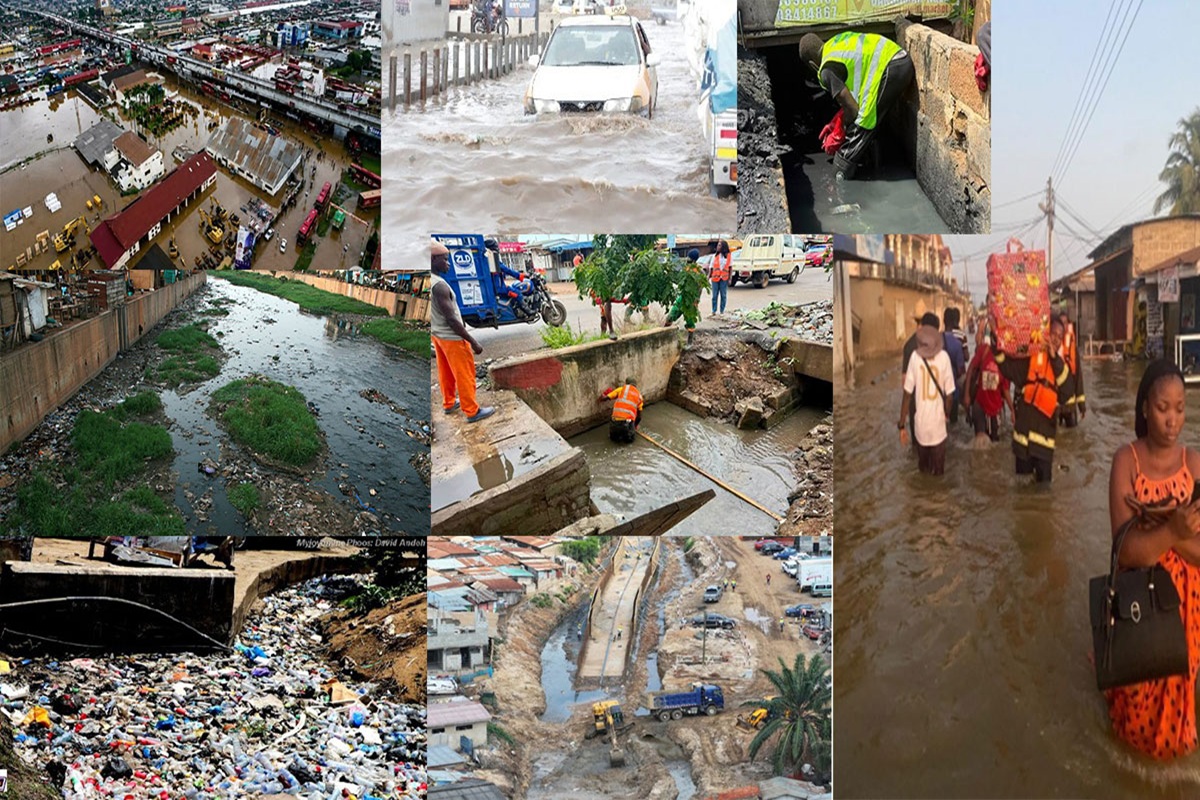
A brief 30-minute downpour is now all it takes to plunge Ghana’s capital city into a state of absolute chaos and structural paralysis. When just 30 millimeters of rainfall hits the surface of Accra, major commercial and residential arteries transform into dangerous, fast-flowing rivers within moments.
This recurring environmental crisis exposes a deep structural failure where outdated colonial engineering, explosive population growth, and public indiscipline collide. As extreme weather patterns intensify, understanding the mechanics behind an intense Accra flood event is the first step toward demanding permanent structural change.
The tragedy of Accra’s perennial flooding is not a simple natural hazard that we can blame entirely on changing global weather systems. It is an entirely manufactured infrastructure failure that stems from a system operating far beyond its physical breaking point. Let us pull back the curtain on why our capital city drowns by design and examine what must be done to fix it.
Why Are We Still Relying on an Inadequate Drainage System Built for Six Million People?
The foundational layout of Ghana’s national drainage network was engineered during the era of Dr. Kwame Nkrumah when the entire country’s population hovered around six million citizens. Today, Ghana’s population has surged past 30 million people, yet the capital city is forced to rely on that exact same legacy infrastructure to handle surface runoff. According to historic census data, Accra alone now holds nearly four million residents, completely overwhelming the carrying capacity of channels built over sixty years ago.
When engineering teams under the Nkrumah administration designed the primary concrete storm drains, large swaths of the capital were open grasslands and natural agricultural fields. These vast green belts acted as natural sponges, absorbing massive quantities of water before it could ever reach the primary drainage channels.
As the rural-to-urban migration wave accelerated, those protective green fields were rapidly replaced by concrete driveways, asphalt roadways, and massive roofing systems. This extensive paving means that rainwater can no longer seep into the soil, forcing up to 90% of a storm’s volume to run along the surface simultaneously and triggering a severe Accra flood within minutes.
No legacy infrastructure system, regardless of how well it was constructed in the 1960s, can survive a five-fold increase in volume without systemic expansion. The failure to expand primary collectors in step with the real estate boom means our engineering defenses are physically obsolete.
How Does Plastic Pollution in the Odaw River Cripple the City’s Main Drainage Artery?
The Odaw River basin serves as the primary drainage highway for the Accra metropolis, carrying water away from dense zones like Alajo, Achimota, and the Kwame Nkrumah Interchange directly into the ocean. However, this critical hydraulic channel has been turned into a massive open gutter choked with millions of tons of non-biodegradable plastic waste. Environmental studies indicate that this continuous accumulation of solid waste reduces the functional carrying capacity of the river by over 70%.
When a storm hits the city, floating plastic bottles, single-use bags, and domestic refuse form massive structural blocks at critical choke points beneath low-hanging bridges. These dense blockages cause the rushing stormwater to back up rapidly, overflowing the concrete banks and flooding adjacent commercial markets. Every bottleneck in this river basin guarantees a catastrophic Accra flood that displaces thousands of local traders.
The issue is heavily worsened by a lack of sustainable, decentralized municipal waste collection systems across informal urban settlements. Without affordable alternatives, many residents resort to dumping household trash directly into neighborhood gutters during active downpours, assuming the water will carry it away. Instead, this debris travels straight into primary collection arteries, settling as thick silt along the bottom of the channels and permanently reducing their depth. A city that cannot manage its solid waste collection will never be able to manage its floodwaters.
Why Do We Continue to Permit Illegal Construction Directly on Natural Waterways?
A major factor behind the extreme nature of local flash floods is the high level of indiscipline regarding building projects within known floodplains and natural water channels. Where water once moved freely across low-lying valleys, developers have erected expensive apartment complexes, commercial warehouses, and informal residential structures. When heavy rain falls on the surrounding hills, the rushing water follows its natural path to the sea, destroying any building that stands in its way.
Urban planning experts note that natural wetlands like the Sakumo Lagoon and the Densu Delta have faced massive encroachment from unauthorized developments over the last two decades. These protected ecosystems were meant to serve as the city’s natural safety valves, holding millions of gallons of excess storm runoff during peak periods.
The structural issue is heavily compounded by weak enforcement of zoning laws and the questionable issuance of building permits by corrupt local authorities. When a permanent building blocks a drainage pathway, the water does not simply vanish; it redirects into neighboring communities, turning a manageable downpour into a destructive Accra flood.
Enforcement agencies often target vulnerable roadside kiosks after a major flood, but they routinely ignore the massive concrete walls of wealthy estates built on wetlands. Until building regulations are enforced across all income levels without political favor, the water will continue to claim its space.
What Concrete Emergency Strategies Must Every Citizen Adopt to Survive Active Floods?
When an intense downpour begins paralyzing Accra’s transit networks, immediate self-preservation must take priority over protecting material property or attempting to commute. Disaster management databases show that the vast majority of Accra flood fatalities happen when individuals try to walk or drive through moving water currents. It takes less than six inches of swift water to knock a healthy adult off their feet or stall a vehicle’s engine completely.
If you find yourself caught in an active flood scenario within your home or workplace, implement this exact survival protocol without delay:
- Shut Off Electrical Mains: Disconnect your main breaker box before water reaches any electrical outlets to eliminate the hidden threat of electrocution.
- Move Extensively Upward: Relocate your family to an upper floor level or a designated community high point as soon as water breaches your outer gates.
- Avoid Moving Vehicles: Never attempt to drive through submerged roadways, since hidden open drains and missing culverts are entirely invisible from the driver’s seat.
- Monitor Official Updates: Keep a battery-powered radio or a fully charged mobile device active to track emergency rescue updates from safety agencies.
Clean drinking water becomes an immediate scarcity during major flood emergencies because overflowing storm drains routinely contaminate local underground pipes and wells. Consuming untreated water during a crisis exposes your household to severe outbreaks of waterborne pathogens such as cholera and typhoid. Always maintain a dedicated emergency supply of bottled water stored safely on high shelves.
What Structural Weather Scenarios Must Ghanaians Expect in the Coming Days?
Satellite imaging models from regional meteorological agencies indicate that the West African monsoon belt will remain highly active, bringing sustained low-pressure systems across the southern sector. Because the ground throughout the Greater Accra Region is already fully saturated, any new rain cells will instantly transform into flash floods with zero warning time. GMet has advised residents in low-lying zones to maintain maximum situational awareness as wet conditions persist through the coming weeks.
| Forecasted Weather Metric | Risk Level for Communities | Required Civil Action |
| Sustained Torrential Rainfall | Critical across southern coastal plains | Avoid all non-essential road travel |
| Fully Saturated Subsoil | High risk of foundation wall collapses | Inspect and brace weak structural barriers |
| Severe Microburst Wind Squalls | Moderate danger to loose metal roofs | Secure outdoor items and prune dead trees |
| High Marine Tidal Flows | Extreme threat to coastal fishing hubs | Temporarily relocate communities inland |
These upcoming storm systems are expected to hit during late evening and pre-dawn hours, severely reducing visibility on unlit roads. Night-time flash floods are particularly dangerous because they catch sleeping families off guard, making timely evacuation incredibly difficult without community warning alarms.
Public utility networks are also predicting localized operational shutdowns, as electricity suppliers often cut power to flooded transformers to protect the grid from explosions. Residents should prepare for extended power outages and temporary disruptions in mobile network connectivity as heavy winds impact overhead infrastructure.
How Can Ghana Transition Toward a Modern Stormwater Management Blueprint?
Overcoming the annual cycle of destruction requires Ghana to completely abandon reactive emergency responses and invest heavily in integrated civil engineering solutions. We must systematically expand our hydraulic infrastructure by constructing deep storm bypass canals that connect major low-lying basins directly to the Atlantic Ocean. Relying on seasonal dredging operations along the Odaw River is a temporary fix that fails as soon as the first heavy rain falls.
Municipal assemblies must also transition toward sustainable urban design models, making it mandatory for large commercial developments to install functional rainwater harvesting reservoirs. These retention tanks collect millions of gallons of water during the peak of a storm, preventing it from overwhelming nearby gutters all at once and lowering the overall peak intensity of an Accra flood.
Finally, local authorities must establish a zero-tolerance policy regarding the protection of natural wetlands, river buffers, and drainage paths. Every unauthorized structure that compromises a water pathway must be removed at the owner’s expense, regardless of their social standing or political ties. Capital cities across the tropics face intense rainfall every year without drowning; Accra can achieve that same resilience through discipline, enforcement, and modern engineering.
Also Read: Accra Floods: President Mahama Directs Release of GHS 300 Million for Relief and Mitigation