

 By Emmanuel Bamfo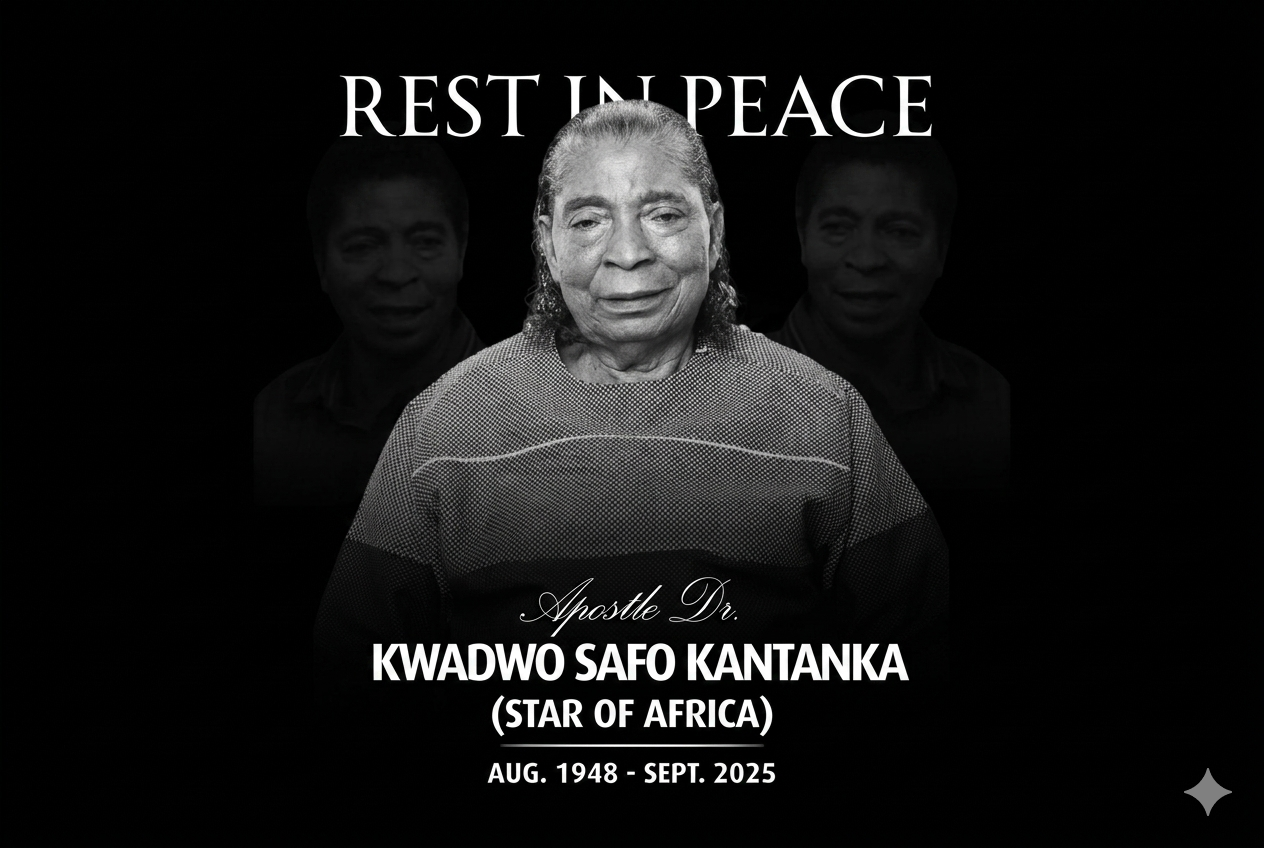
The high-stakes legal battle over the final burial rites of Apostle Kwadwo Safo Kantanka has thrown his family and millions of followers into deep anxiety. An interim court injunction and unresolved succession disputes have halted all funeral preparations until the High Court determines the rightful authority over his estate and funeral arrangements.
The passing of the iconic innovator and religious leader left a massive void across Ghana’s industrial and spiritual landscape. However, instead of a unified celebration of a legendary life, public attention has shifted to courtroom drama and family tension.
Who Was Apostle Kwadwo Safo and Why Does His Legacy Matter So Much?
Apostle Kwadwo Safo Kantanka was a visionary Ghanaian inventor, industrialist, and founder of the Kristo Asafo Mission. His death on September 11, 2025, at the age of 77 marked the end of an era for indigenous African technological innovation.
Born on August 26, 1948, in Bekwai in the Ashanti Region of Ghana, Apostle Safo spent decades proving that technological mastery is not exclusive to Western or Asian nations. After studying engineering at the Ghana Technical Works Institute in Kumasi, he worked as a welder at the Volta Aluminium Company (VALCO) before dedicating his life to religious ministry and practical engineering.
In 1969, he started a prayer group that evolved into the Kristo Asafo Mission by 1971. Unlike traditional churches, Kristo Asafo integrated spiritual teachings with practical agriculture, electronics, and mechanical engineering.
By 1994, Apostle Safo established Kantanka Automobile. The company made history by assembling commercial vehicles, including the flagship Omama SUV and Onantefo pickup truck, adapted specifically for rugged African road conditions.
His contribution to national development earned him widespread honor, including the prestigious Innovative Pioneer Award at the GUBA Awards in 2017. Because he touched so many lives through charity, job creation, and spiritual guidance, news of his passing deeply affected the entire nation.
Beyond automotive manufacturing, Apostle Safo built an extensive empire of organic farms, educational institutes, and community health centers that served thousands of Ghanaians every single day. His philosophy centered on African self-reliance, proving to generations of young people that local talent can build world class solutions.
His annual technology exhibitions at Gomoa Mpota drew government officials, foreign diplomats, traditional rulers, and students from across West Africa. These showcases featured everything from advanced agricultural machinery and block-making robots to military hardware and electric vehicles.
When news of his passing broke, citizens across the country expected a state-level farewell that would honor his enormous contributions to nation building. Instead, procedural delays and legal disagreements have created widespread grief among those who admired his lifelong dedication to African progress.
Why Has the High Court Placed a Hold on Apostle Safo’s Funeral?
The High Court placed a hold on Apostle Kwadwo Safo’s funeral following urgent legal applications filed by aggrieved family members and church leaders. The court issued an interim injunction to prevent any party from proceeding with final burial rites until key legal controversies are resolved.
At the center of the dispute is a fundamental clash over who possesses the legal and customary authority to organize the funeral. One faction of the family, supported by key church elders, announced specific funeral dates and venues without unanimous consent from all principal head-of-family members.
In response, dissenting family members approached the High Court to halt the process. They argued that unilateral decisions violate Akan customary practices regarding the burial of a prominent patriarch.
Ghanaian law dictates that when serious disputes arise regarding the custody of a deceased body, courts must intervene to preserve order. The court order ensures that no burial or public memorial can take place until all legal challenges receive proper hearing and determination.
For followers who prepared to pay their final respects, the legal freeze brings profound emotional frustration. Yet, from a legal standpoint, the injunction remains necessary to protect all parties and prevent potential public disturbances.
The legal action highlights deep structural friction between family traditions and modern corporate governance within large religious bodies. When a leader’s public persona spans both sacred duty and private enterprise, determining who holds the ultimate key to final arrangements requires delicate legal handling.
Legal experts note that interim injunctions in burial cases are meant to maintain the status quo while the judge evaluates the merits of the substantive arguments. Proceeding with a funeral while legal title over custody remains disputed can lead to irreversible outcomes that courts strictly try to avoid.
Meanwhile, the body remains preserved in safe custody while lawyers on all sides prepare their statements. Until a final verdict is delivered or an out of court agreement is reached, no official public viewing or burial service can lawfully occur.
What Caused the Internal Family Feud and Succession Tussle?
The succession tussle erupted due to conflicting claims over the spiritual leadership of Kristo Asafo and administrative control over Apostle Safo’s vast estate. Disagreements over key positions created a sharp split between immediate family members and church executives.
Apostle Safo raised a large family, including notable public figures such as former Member of Parliament Sarah Adwoa Safo and businessman Kwadwo Safo Junior. Following the patriarch’s death, competing groups emerged regarding who should assume the title of spiritual leader and head of the Kristo Asafo movement.
Tensions reached a boiling point when certain individuals publicly proclaimed leadership claims over the mission without full approval from the governing council. Reports of confrontations at the family residence further escalated the dispute into formal court cases.
The conflict is not merely about who lays the late Apostle to rest. It involves control over significant commercial assets, educational institutes, agricultural estates, and religious properties spread across the country.
Without a clear, universally accepted written succession plan for every aspect of the empire, court litigation became almost inevitable. The court must now untangle complex issues of church constitutionality, family heritage, and estate execution.
The leadership structure of indigenous African churches often relies heavily on the charismatic authority of the founder. When such a founder passes away without an undisputed successor, administrative gaps frequently lead to competing factions asserting legitimacy.
In this case, the family line intersects with church governance in ways that complicate simple administrative transitions. Some elders insist that church administrative rules should dictate leadership, while certain family heads hold firm that lineage rights must take priority.
The public nature of this disagreement has saddened many observers who hoped for a peaceful transition. However, the legal process provides a formal arena where documents, witnesses, and historical records can be examined impartially.
What Are the 8 Key Factual Insights Surrounding the Funeral Dispute?
Understanding this complex story requires separating factual evidence from social media rumors. Here are eight verified factual insights regarding the life, passing, and ongoing legal proceedings surrounding Apostle Kwadwo Safo.
- Date of Passing: Apostle Kwadwo Safo Kantanka officially passed away on September 11, 2025, at the age of 77.
- Church Foundation: He established the Kristo Asafo Mission in 1969 as a prayer group before registering it as an African-initiated church in 1971.
- Automotive Milestone: Kantanka Automobile was founded in 1994, launching commercial vehicle assembly in Ghana with locally adapted models.
- Court Jurisdiction: The High Court of Ghana holds legal jurisdiction over the interim injunction restraining the funeral activities.
- High Profile Kinship: His children include prominent Ghanaian public figures, such as lawyer and former Minister Sarah Adwoa Safo.
- Customary Law Precedent: Under Ghanaian jurisprudence, the extended family holds primary customary ownership over a deceased person’s body for burial purposes.
- Security Measures: Law enforcement officers were deployed to monitor key Kristo Asafo premises following reported altercations between rival factions.
- Industrial Scope: The Kristo Asafo empire spans automobile manufacturing, commercial farming, organic pharmaceuticals, electronic research, and technical education.
These facts highlight why this case draws massive national interest across Ghana and the wider West African region.
Each of these factual points illustrates how deeply intertwined Apostle Safo’s personal journey was with the broader social and economic development of Ghana. The resolution of this case will set a significant precedent for how legacy assets and traditional leadership transitions are managed in modern West Africa.
Journalists, legal analysts, and church historians continue tracking courtroom developments to document this moment accurately. Transparent reporting helps dispel harmful misinformation that often circulates during high profile legal disputes.
Understanding the factual foundation helps all involved appreciate why the judicial system must act carefully. Thorough legal scrutiny protects the interests of family members, church congregants, employees, and the general public.
How Does Ghanaian Customary Law Handle Burial Disputes of Prominent Leaders?
Ghanaian customary law establishes that the custody and burial of a deceased person belong primarily to the extended maternal family, known as the Abusua in Akan custom. While biological children and church members play significant roles, customary law gives the family head, known as the Abusuapanin, final decision-making power over burial rites.
When conflicts occur between customary law and statutory church constitutions, Ghanaian courts examine several factors. Judges review whether the deceased left a legally binding will or specific written directives regarding burial preferences.
In landmark cases ruled on by the Supreme Court of Ghana, courts have repeatedly affirmed that children cannot unilaterally override the Abusuapanin regarding final funeral rites. However, courts also protect the rights of immediate family members from arbitrary exclusion by extended relatives.
Because Apostle Safo was both a paramount traditional leader in his own right and the founder of a registered religious organization, dual legal frameworks apply. The High Court must carefully balance Akan customary tradition with modern corporate and trust law.
Until the court establishes which entity holds legal authority, neither the Kristo Asafo executive council nor individual children can proceed independently. This legal balancing act explains why proceedings require meticulous deliberation.
In traditional Akan society, the extended family retains ultimate responsibility because they represent the ancestral bloodline. Customary protocol requires that the head of the family receives formal notification before any burial plans are made public.
Failure to follow these customary steps can invalidate agreements and lead to spiritual or social sanctions within the community. When modern legal structures meet these deep rooted customs, judges must find a harmonious middle ground.
The court examines customary evidence by consulting traditional elders, historical precedents, and sworn affidavits from key family members. This thorough approach ensures that the eventual ruling respects both statutory law and cultural heritage.
What Is the Impact of This Legal Delay on Kantanka’s Business Empire?
The legal delay creates operational uncertainty across the commercial and industrial arms of the Kantanka group. Brand perception, investor confidence, and daily decision-making face challenges while leadership litigation continues in court.
Kantanka Automobile operates as a private commercial entity reliant on steady management and strategic direction. Prolonged courtroom battles among key heirs risk slowing down product innovation, supply chain management, and international partnerships.
Furthermore, thousands of employees across farms, workshops, and educational institutes depend on stable leadership. Public anxiety over the internal rift can affect consumer trust in domestic Ghanaian brands.
On the positive side, senior executives within the various companies continue running daily business operations. The management team has reassured the public that production lines and customer service remain active despite the personal family dispute.
Preserving Apostle Safo’s industrial legacy depends heavily on a swift, amicable resolution. Business analysts agree that transitioning from founder-led operations to professional corporate governance remains critical for long-term survival.
The industrial operations of the Kantanka brand extend beyond domestic automobile sales into renewable energy research and industrial machinery manufacturing. Interruptions in leadership focus can delay critical research projects aimed at reducing technology import costs for Ghana.
Commercial partners and institutional buyers closely monitor the situation to evaluate supply stability and warranty enforcement. Clear communications from the executive board have helped maintain client trust during this transition period.
Financial experts stress that establishing independent boards of directors across all subsidiaries can shield commercial enterprises from personal family disputes. This corporate separation ensures that factories keep running regardless of courtroom developments.
Ultimately, the strength of the Kantanka brand relies on the foundational technology and goodwill built over five decades. Protecting that value requires all stakeholders to keep business operations insulated from ongoing estate disagreements.
How Are Kristo Asafo Members Reacting to the Court Proceedings?
Members of the Kristo Asafo Mission express a combination of grief, confusion, and hope for reconciliation. Thousands of devoted followers who view Apostle Safo as a spiritual father continue praying for peace among his heirs.
In worship centers across Ghana, congregants gather for regular services while waiting for official updates regarding funeral dates. Many members express frustration that internal disputes are overshadowing the late leader’s decades of philanthropic work.
Church elders have repeatedly urged calm and restraint among youth wings and congregants. They emphasize that Kristo Asafo was built on principles of hard work, self-reliance, and unity.
Social media platforms remain filled with passionate debates among Ghanaians at home and in the diaspora. Many appeal to respected national statesmen and traditional rulers to step in and mediate the feud out of court.
The general sentiment among followers remains clear. They desire a dignified, harmonious farewell for the man who dedicated his life to lifting up African technology and culture.
For many congregants, Kristo Asafo is not just a church but a way of life that defines their community identity and economic livelihood. The sudden halt to funeral proceedings has left regional branches searching for clear spiritual guidance during Sunday services.
Prayer vigils organized across various regions focus on seeking divine wisdom for the family and church leadership. Members frequently share memories of Apostle Safo’s generosity, encouraging one another to remain steadfast in faith.
The youth executive within the movement has actively counseled members to avoid spreading unverified rumors on social media networks. They remind the congregation that constructive dialogue and patience best serve the legacy of their founder.
Faithful followers remain confident that the trial will eventually bring clarity and renewed strength to the church. They look forward to assembling in unity once a final date for the burial celebration is officially announced.
When Will Apostle Kwadwo Safo Finally Be Laid to Rest?
Apostle Kwadwo Safo will be laid to rest only after the High Court resolves the injunction or the warring factions achieve an out-of-court settlement. Once the legal hold is lifted, the family will announce official funeral dates to the public.
The legal process requires both sides to present their arguments, evidence, and customary claims before a judge. Depending on court schedules and willingness to negotiate, this process can take weeks or several months.
Mediation remains the fastest route toward resolving the stalemate. Prominent chiefs, religious bodies, and statesmen have offered to help arbitrate between the family factions to avoid protracted litigation.
If mediation succeeds, the parties can submit a consent judgment to the High Court, effectively lifting the injunction. This would pave the way for a state-assisted, culturally fitting burial celebration.
Until then, the nation waits patiently. Apostle Kwadwo Safo Kantanka built a legacy of self-reliance and innovation that will outlast current legal disagreements.
A peaceful resolution will allow the entire country to pay tribute to a true pioneer of African industrialization. His contributions to automotive engineering, agricultural mechanization, and social empowerment remain firmly etched in Ghanaian history.
When the final burial rites take place, they are expected to draw dignitaries, inventors, and followers from across the globe. It will mark a defining moment of reflection on a life dedicated to proving African capability.
Until that day arrives, respect for the legal process and dedication to preserving his vision remain the top priorities for all who love Apostle Safo. His memory continues to inspire millions toward self-reliance, innovation, and national pride.
Also Read: shock at assin odumase funeral family discovers body was buried by strangers 3 months ago