

 By Collins Sarkodieh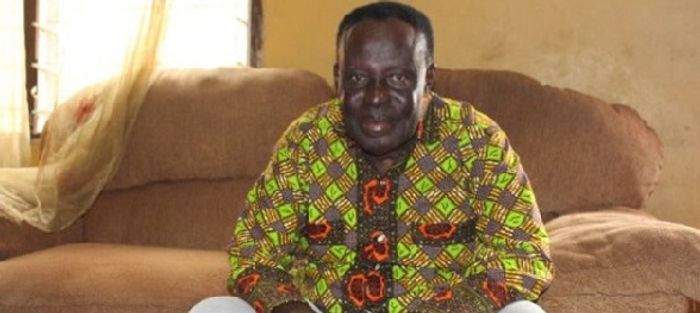
The Ghanaian entertainment industry has been hit with a profound loss following the death of veteran actor Frimpong Manso, popularly known as Osofo Dadzie. The legendary performer, who served as the lead character in the iconic television drama series “Osofo Dadzie,” passed away at the age of 89 after a period of battling an undisclosed ailment.
The news was confirmed on Monday morning by fellow actor Clement Bonney, known widely as Mr. Beautiful, during an interview on Accra-based Okay FM. Frimpong Manso was more than just an actor; he was a moral compass for a generation, famous for his signature closing sermons that summarized the ethical lessons of each episode. His passing marks the end of an era for Ghanaian television and the legendary Osofo Dadzie Group.
Who was Frimpong Manso and why was he a household name?
Frimpong Manso was the lead protagonist and face of the “Osofo Dadzie” drama group, which dominated Ghanaian television airwaves throughout the 1970s and early 1980s. His role as a wise, affable pastor who provided spiritual and social guidance made him one of the most recognizable figures in the history of the Ghana Broadcasting Corporation (GBC).
Beyond his acting prowess, Manso eventually transitioned into a producer, helping to shape the narrative arc of Ghanaian storytelling. His ability to blend humor with serious societal critiques allowed the show to resonate with both the elite and the ordinary citizen. For decades, his name was synonymous with integrity, largely because he lived a life that mirrored the virtuous character he portrayed on the screen.
How did the Osofo Dadzie series change Ghanaian television?
The “Osofo Dadzie” series revolutionized the concept of edutainment in Ghana by using the concert party format to address sensitive social issues like greed, corruption, and family disputes. It was the first time many Ghanaians saw their daily struggles reflected in a high-quality television production that was both entertaining and morally instructive.
The series was produced by the Osofo Dadzie Group, a collective of immensely talented actors who became national icons. At a time when television sets were rare and often shared by entire neighborhoods, the show acted as a communal gathering point. The group’s success paved the way for future generations of filmmakers and actors, proving that local stories told in local dialects could command national attention and respect.
What are the details surrounding the death of Osofo Dadzie?
Frimpong Manso passed away at the age of 89 after a battle with an ailment that remained undisclosed to the public. According to Mr. Beautiful, the actor’s sister reached out to him with the news on Monday morning, noting that he had been one of the last people to visit the veteran actor just a month prior.
Mr. Beautiful described the late actor as a mentor and a pillar of the industry whose presence would be sorely missed. While the exact medical cause of death was not highlighted, his advanced age and the length of his illness suggest a natural conclusion to a long and impactful life. Fans across the country have already begun sharing tributes, recalling the nostalgic Sundays spent watching him preach the final word of every episode.
Who were the other legendary members of the Osofo Dadzie Group?
The success of the series was built on the incredible chemistry of a cast that included late greats such as Asonaba Kwaku Darko (Super OD), S. K. Oppong, Fred Addai, Akua Boahemaa, and Bea Kissi. Together, they formed a comedic and dramatic powerhouse that was unrivaled in West African television during their peak years.
Each member brought a unique flavor to the group; Super OD provided the witty, often mischievous humor, while S. K. Oppong and the leading ladies provided the dramatic tension. Frimpong Manso, as Osofo Dadzie, was the glue that held these diverse personalities together, providing the sobering resolution to their chaotic storylines. The loss of Manso means that most of the original “Osofo Dadzie” titans have now passed into history, leaving behind a rich archive of cultural heritage.
Why was the “closing sermon” so significant in the series?
The signature ending of every episode featured Osofo Dadzie speaking directly to the camera, summarizing the day’s moral lessons through a mix of scripture and traditional wisdom. This segment was so influential that it often became the subject of Monday morning conversations in markets and offices across Ghana.
This format helped solidify the actor’s reputation as an “Osofo” (Pastor) in real life, even though he was primarily a performer. It bridged the gap between fiction and reality, making the audience feel that the advice given was not just for the characters in the show, but for the nation as a whole. This tradition of moral summarizing is still seen in many modern Ghanaian dramas today, illustrating the lasting impact of Manso’s creative choices.
What is the legacy of Frimpong Manso in the Ghanaian film industry?
Frimpong Manso leaves behind a legacy of professionalism, humility, and dedication to the craft of storytelling as a tool for national development. He proved that an actor could be a celebrity while maintaining a high degree of respect and moral authority within society.
His transition from lead actor to producer was a pioneering move that encouraged other actors to take control of their creative output. He was instrumental in documenting the social history of post-independence Ghana through drama. Today’s “Kumawood” and “Ghallywood” stars owe much of their platform to the foundations laid by Manso and his colleagues, who proved that there was a massive, hungry market for local content.
How will Ghana remember the “affable actor” who preached through the screen?
The nation will remember him as a comforting presence who brought families together during a period of significant political and social change in Ghana. His “affable” nature was not just a character trait; it was his personality, often described by those who knew him as welcoming, patient, and deeply wise.
State officials and industry leaders are expected to pay their respects in the coming days, acknowledging his contribution to the national culture. For many, his death is a reminder to preserve the remaining footage of the “Osofo Dadzie” series, as much of it serves as a primary source for understanding Ghanaian life in the late 20th century. He was a man who used his voice not for noise, but for the betterment of his neighbor.
What lessons can modern actors learn from Osofo Dadzie’s career?
Modern actors can learn the importance of longevity and the value of creating a “brand” based on substance rather than just fleeting trends. Manso’s 89-year life and his decades-long career show that a commitment to quality and moral clarity can sustain a legacy far longer than modern social media fame.
He also demonstrated the power of teamwork. The Osofo Dadzie Group was a collective that survived through mutual respect and shared goals. In an era where individual stardom often takes precedence, the story of Frimpong Manso reminds us that the greatest cultural impacts are often made by those who work together to tell a story larger than themselves.
Also Read: Serwaa Amihere Pays Emotional Tribute as Daddy Lumba’s Death Sends Shockwaves Across Ghana