

 By Collins Sarkodieh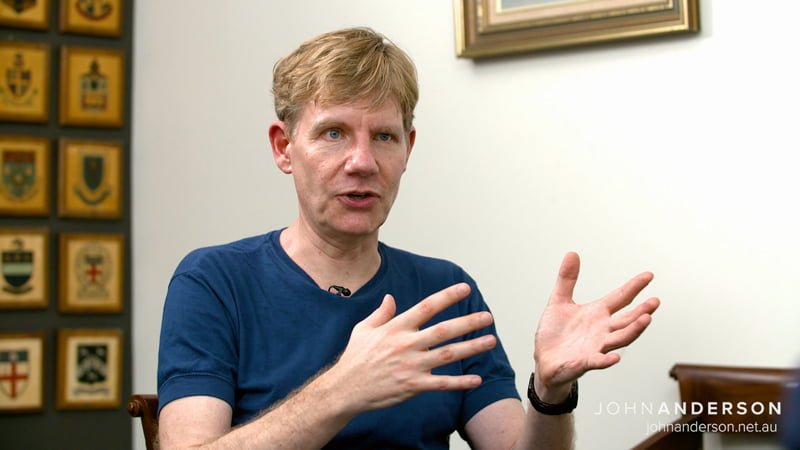
In the wake of the global COVID-19 pandemic, international experts and local researchers have urged the Ghanaian government to adopt more efficient resource management strategies.
Dr. Bjorn Lomborg, President of the Copenhagen Consensus Centre, emphasized during the Ghana Priorities Conference in Accra that the nation must utilize its limited resources in the “smartest ways possible” to maintain its status as a development success story.
Prior to the pandemic, Ghana achieved a remarkable 3.5% average annual increase in real GDP per capita, while extreme poverty plummeted by nearly 80% according to the Ghana Statistical Service. However, as the global crisis strains national budgets, the focus must shift to high-impact policies that offer the greatest social and economic returns for every cedi spent.
What is the Ghana Priorities Conference and why does it matter now?
The Ghana Priorities Conference is a high-level academic and policy forum spearheaded by the National Development Planning Commission (NDPC) in collaboration with the Copenhagen Consensus Centre. It brings together dozens of researchers to apply rigorous cost-benefit analysis to government policies, ensuring that public funds are directed toward interventions with the highest proven impact.
In a world where COVID-19 has tightened fiscal space, guessing which policies work is no longer an option. This conference serves as a strategic filter, allowing a panel of eminent scholars to vet dozens of research papers across sectors like health, education, and sanitation. By prioritizing policies based on their “benefit-cost ratio,” Ghana can ensure that even with limited funds, the path toward the 2030 Sustainable Development Goals remains viable.
Which poverty reduction programs offer the best return on investment?
Research presented by Prof. Charles Adjasi of Stellenbosch University suggests that “poverty graduation” programs are significantly more effective than traditional cash transfers or microfinance. For every single cedi invested in poverty graduation, the nation receives approximately 1.8 cedis in sustained social and economic benefits throughout the recipient’s lifetime.
Unlike simple cash transfers, which provide temporary relief, graduation programs use a holistic approach including asset transfers, training, and coaching to move families permanently out of extreme poverty. While microfinance and social housing remain popular, the data suggests they often lack the long-term sustainability seen in the graduation model. By focusing on this high-return strategy, the government can address the “clusters of poverty” that Dr. Lomborg warns are becoming increasingly expensive and difficult to eradicate.
Also Read: Ghana’s Public Health Policies and Reforms
Why is early childhood nutrition considered a massive economic engine?
Improving nutrition during the prenatal stage and early childhood is one of the most powerful tools for boosting long-term national productivity and reducing the burden of avoidable disease. Stunting, caused by undernourishment, permanently hinders cognitive development, ensuring that a child will earn less and contribute less to the economy as an adult.
The numbers presented by Prof. Richmond Aryeetey and Prof. Paul Kwame Nkegbe are staggering. Complementary feeding promotion offers a social return of 36 cedis for every cedi invested. Breastfeeding promotion yields 24 cedis, and micronutrient supplementation in pregnancy returns 18 cedis. When children receive proper nutrition, their brains develop better, they stay in school longer, and they eventually become highly productive adults who drive GDP growth.
How does improved sanitation impact Ghana’s urban development?
With only 22 per cent of Ghana’s urban population currently having access to improved sanitation facilities, the lack of private toilets is becoming a major hurdle for public health. Rapid urbanization is complicating the issue, as shared toilets remain the most common service option in cities, often leading to increased disease transmission and lower quality of life.
Sanitation is not just a health issue; it is a serious economic challenge that requires urgent intervention to prevent productivity losses from illness. Effective urban planning must move beyond “shared” facilities toward more sustainable and private options to match the pace of Ghana’s growing cities. Researchers emphasize that fixing sanitation today prevents the massive healthcare costs of tomorrow, making it a “smart” use of resources according to the Copenhagen Consensus criteria.
Is education more effective than direct poverty interventions?
While direct poverty programs like cash transfers have their place, Dr. Bjorn Lomborg pointed out that indirect approaches through education and healthcare often provide even greater value for money. Presentations throughout the conference have shown that for the same amount of cedis, improving school quality or healthcare access can help significantly more people in the long run.
Education acts as a multiplier. A well-educated workforce attracts foreign direct investment and fosters local innovation, which naturally lifts people out of poverty without the need for lifelong subsidies. By shifting a portion of the budget toward high-yield educational reforms, the government can tackle the root causes of poverty rather than just managing its symptoms.
What are the “Eminent Panel’s” recommendations for the 2021 budget?
The seven-member Eminent Panel is tasked with ranking all presented interventions from the most to the least cost-effective to guide the National Development Planning Commission. Their recommendations will likely prioritize “low-hanging fruit” like micronutrient supplementation and breastfeeding promotion, which require relatively low investment but offer massive societal payouts.
By providing a clear “rank list,” the panel gives politicians a scientific shield against inefficient spending. Instead of funding projects based on political popularity, the NDPC can argue for budget allocations based on hard data. In the 2021 budget cycle, these findings will be critical in deciding which programs are expanded and which are phased out in favor of smarter alternatives.
How can Ghana maintain its development “success story” post-COVID?
To sustain its pre-pandemic growth of 3.5% per year, Ghana must double down on transparency and data-driven governance. Dr. Lomborg noted that while the fall in extreme poverty by 80% is impressive, the remaining poverty clusters require a much more surgical approach to eradicate.
Maintaining this success requires a shift in mindset from “how much are we spending?” to “what are we getting for our money?” If the government can successfully implement the top-tier recommendations from the Ghana Priorities Conference, the country could potentially emerge from the pandemic stronger and more efficient than before. The focus on cost-benefit analysis ensures that the “Ghana Beyond Aid” agenda is built on a foundation of economic logic rather than just hope.
Why is the National Development Planning Commission (NDPC) central to this strategy?
The NDPC serves as the bridge between academic research and actual government policy, ensuring that the findings from the Copenhagen Consensus Centre don’t just gather dust on a shelf. Their collaboration with international think tanks signals a commitment to global best practices in developmental economics.
By spearheading this conference, the NDPC is creating a roadmap for Ghana’s future that transcends political cycles. Whether it is improving sanitation in Accra or boosting nutrition in rural areas, the commission is looking for “Ghanaian solutions” that are validated by international data. This approach is essential for building a resilient economy that can withstand future global shocks.
Also Read: Ghana’s Vaccination Programs and Public Health