

 By Collins Sarkodieh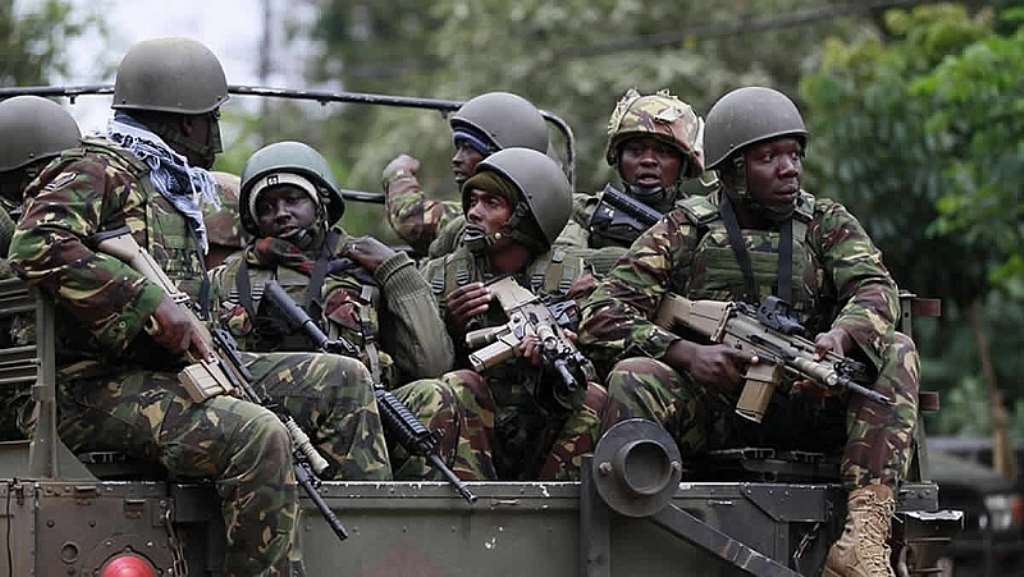
The Ghana Armed Forces (GAF) has confirmed a violent encounter in Binduri that resulted in the deaths of 10 individuals following an ambush on a military-protected civilian convoy. In a formal statement released on Monday, April 27, 2026, the Army detailed how a group of “unknown elements” opened fire on a transport of 140 civilians, leading to a fierce retaliatory shootout.
Among the casualties were three civilians and seven of the assailants who initiated the attack. Military officials reported that the prompt response of the escort team prevented a larger massacre of the 140 people under their care. Beyond the fatalities, the operation led to the arrest of 11 suspects and the recovery of high-grade military weaponry, marking one of the most significant security breaches in the Upper East Region this year.
What happened during the Binduri convoy attack?
A Ghana Armed Forces escort convoy was ambushed by armed gunmen while transporting 140 civilians from Bawku toward Bolgatanga on the morning of April 27, 2026. The attackers launched a surprise assault, firing multiple rounds into the vehicles, which forced the military to engage in a lethal repulse to protect the lives of the travelers.
The geography of the Binduri area often complicates security due to its proximity to volatile border zones. On this occasion, the attackers took advantage of the convoy’s movement to launch their strike. The military’s tactical training was put to the test as they shifted from a protective stance to an offensive one to neutralize the threat. While they successfully fended off the gunmen, the initial burst of gunfire from the “unknown elements” unfortunately claimed the lives of three innocent civilians before the soldiers could fully suppress the assault.
How many people died in the Ghana Army shootout in Binduri?
The total death toll from the Binduri incident stands at 10 people, according to the official statement from the Ghana Armed Forces. This figure includes three civilians who were part of the escorted group and seven of the armed assailants who were killed by soldiers during the exchange of fire.
Losing three civilians is a tragic blow to the mission’s objective, but military analysts suggest the toll could have been significantly higher given that 140 people were targeted. The death of the seven assailants indicates a high level of combat intensity. The military’s priority in such scenarios is always the preservation of civilian life, but the chaotic nature of an ambush often makes zero-casualty outcomes nearly impossible when high-powered rifles are used by the enemy.
What weapons were recovered after the Binduri mosque chase?
Following the shootout, the military pursued an escapee into a local mosque, where they retrieved a G3 automatic rifle and a substantial cache of ammunition. The haul included two magazines filled with 20 rounds each and an additional 176 rounds of loose ammunition, highlighting the heavy firepower possessed by the attackers.
The G3 automatic rifle is a high-caliber weapon known for its range and lethality, and its presence in the hands of “unknown elements” is a major concern for national security. Recovering nearly 200 rounds of ammunition suggests the group was prepared for a prolonged engagement. The fact that an assailant sought refuge in a mosque adds a layer of complexity to the investigation, as authorities look into whether the group was using religious or community spaces for cover or storage.
Who are the “unknown elements” arrested in the Binduri clash?
Eleven suspects have been arrested in connection with the attack and are currently assisting the Ghana Armed Forces and the police with investigations. One suspect was apprehended following the chase to the mosque, while ten others were picked up during the subsequent sweep of the area.
Identifying these individuals is the current priority for the intelligence agencies. The term “unknown elements” is often used as a placeholder until formal links to specific insurgent groups, local bandits, or ethnic militias can be verified. Logic suggests that the interrogation of these 11 suspects will reveal the motive behind the attack and whether it was an act of terrorism, a robbery attempt, or a flare-up of the long-standing Bawku conflict that has spilled into Binduri.
Also Rea: Guinea-Bissau Junta Lifts Restrictions on Opposition Figures
Factual Insights on Ghana’s Northern Security 2026:
- Convoy Size: The military was protecting a massive group of 140 civilians, making it a high-value and vulnerable target.
- Weaponry: The G3 rifle recovered is a 7.62mm battle rifle, significantly more powerful than standard handguns or hunting rifles.
- Geographic Sensitivity: Binduri serves as a critical transit point between Bawku and Bolgatanga in the Upper East Region.
- Casualty Ratio: The military neutralized more than double the number of assailants (7) compared to the civilian losses (3).
- Arrest Count: A total of 11 people are in custody, providing a significant lead for military intelligence.
- Conflict Context: The Bawku-Bolga road has historically faced security challenges due to local chieftaincy disputes and regional instability.
- GAF Response: The Ghana Armed Forces have increased their “Operation Halt” and border patrol presence in the northern sector throughout early 2026.
Why is the Binduri shootout a major security concern for Ghana?
The Binduri shootout is a major concern because it represents a direct, coordinated attack on a military-protected convoy, signaling a bold escalation in the tactics used by armed groups. It demonstrates that these “elements” are willing to engage the Ghana Army directly, which poses a threat to the general safety of travel in the Upper East Region.
When a protected convoy is attacked, it challenges the state’s monopoly on force. Logic dictates that if 140 civilians cannot be safely moved under military guard, the psychological impact on the local population will be immense. This incident forces the Ministry of Defence to reconsider the “escort density” and the equipment used to secure these routes. It also raises questions about the source of the high-caliber weapons like the G3, which are often smuggled across borders or siphoned from regional conflict zones.
What are the next steps for the Ghana Armed Forces?
The Ghana Armed Forces have intensified patrols in and around Binduri and are working with the Ghana Police Service to conduct a thorough forensic analysis of the recovered weapons. A broader “search and cordone” operation is likely to follow to ensure that no other caches of ammunition are hidden in the community.
Protecting the remaining civilian population remains the immediate goal. We can expect an increase in checkpoints and more frequent aerial surveillance in the Bawku-Binduri-Bolga corridor. The 11 suspects will likely be transferred to Accra for high-level interrogation by the National Security Coordinator’s office. The “Winning Language” from the Army is one of “repulsion and pursuit,” sending a clear message that any attack on the state or its citizens will be met with overwhelming force.
How does the Binduri incident affect travel in the Upper East Region?
Travelers in the Upper East Region should expect significant delays and a heavy military presence on the roads as security agencies work to stabilize the area. The Bawku toward Bolga route is currently under high-security surveillance, and the GAF may temporarily restrict movement to daytime hours to better manage risks.
For the local economy, this is a setback. Trade between these towns depends on the safe movement of goods and people. Logic suggests that the “escort system” will be refined to include more armored vehicles and advanced scouting drones. Until the 11 suspects are processed and their network is dismantled, the region will remain in a state of high alert. Travelers are advised to follow official GAF directives and avoid using “unapproved” bush paths that fall outside the military’s protective umbrella.
Also Read: President Mahama Commissions Fleet of Military Vehicles for Ghana Armed Forces (Video)