

 By Zobia Zulfqar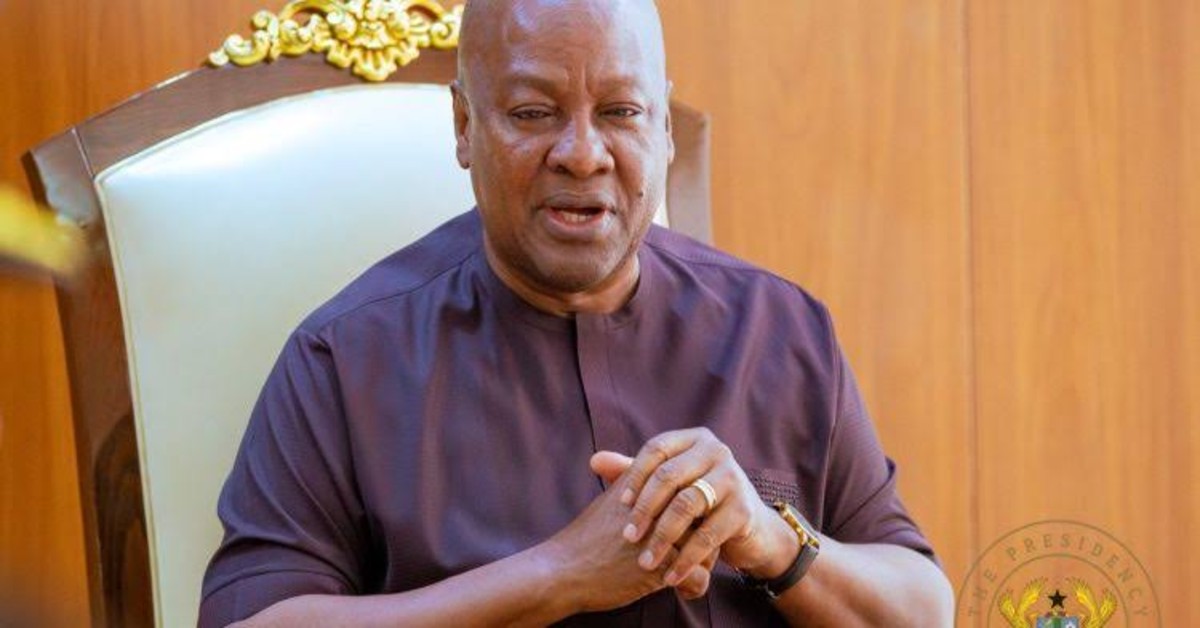
President John Dramani Mahama has expressed confidence that Ghana’s Constitution clearly defines the presidential term limit, despite an ongoing case before the Supreme Court seeking an interpretation of the provision.
Speaking on the matter, the President said he believes the constitutional clause governing presidential tenure is straightforward and does not require further explanation. However, he acknowledged that every citizen has the right to ask the country’s highest court to interpret constitutional provisions.
“I know that people have gone to the Supreme Court seeking interpretation of the clause that governs the tenure of the president. If you ask my personal opinion, I thought that it was clear enough. I’ve read it over several times; it’s exactly what it says, but if they want to ask the Supreme Court, that is their business,” President Mahama said.
The President’s comments come after a lawsuit was filed at the Supreme Court by Ghanaian citizen Ganiwu Alhassan, who is asking the court to determine the meaning of Article 66(2) of the 1992 Constitution.
The case seeks clarification on whether a person who has already served two separate, non-consecutive terms as President can contest the presidency again.
The lawsuit names the Attorney-General as the respondent and asks the Supreme Court to interpret the constitutional provision that states no person shall be elected to hold the office of President for more than two terms.
According to the suit, the court should determine whether the constitutional restriction applies only to consecutive terms or whether it bars anyone who has already served two terms, regardless of whether those terms were consecutive.
President Mahama insisted that, in his view, the Constitution already provides a clear answer.
He explained that he believes Ghanaians elected him to serve one additional term after previously completing his first term in office and that his current tenure falls within the limits set by the Constitution.
The President maintained that the constitutional wording is unambiguous and reflects exactly what the law intends.
Although he expressed his personal opinion, he stressed that citizens are free to seek legal clarification from the courts if they believe further interpretation is necessary.
The Supreme Court is expected to consider the arguments presented by both parties before delivering its interpretation of the constitutional provision.
The outcome of the case could have important implications for the interpretation of presidential term limits in Ghana and may provide legal guidance for future elections.
The Constitution limits the presidency to two terms, but the current lawsuit seeks judicial clarification on how that limit should apply in situations involving non-consecutive terms of office.
The Supreme Court’s decision will establish a binding legal interpretation that will guide future constitutional questions relating to presidential tenure.
President Mahama’s remarks have added to the national discussion surrounding the case, but he has indicated that he remains confident the Constitution is clear as written.
For now, attention is focused on the Supreme Court, which will determine how Article 66(2) should be interpreted and whether any further legal clarification is required regarding Ghana’s presidential term limits.
Also Read: U.S. Embassy in Accra to Suspend Most Consular Services from July 20 to July 31