

 By Emmanuel Fletcher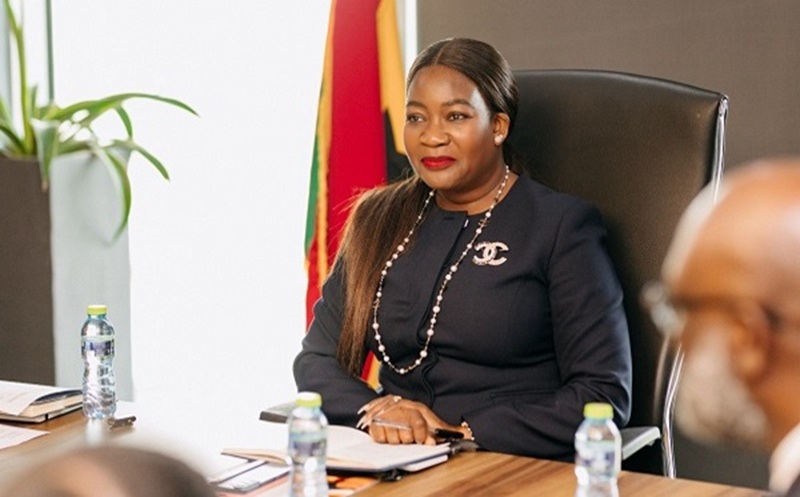
The Minerals Income Investment Fund has delivered a remarkably resilient financial performance, closing the 2025 financial year with an audited profit of 1.1 billion Ghana cedis. The state fund successfully navigated major legal amendments and changing global market conditions to build a much stronger balance sheet.
This impressive financial milestone proves that tight internal discipline and modern capital management can protect public assets even when state royalty allocations drop drastically. Ordinary citizens can rest assured that the agency is managing Ghana’s mineral wealth with absolute transparency and long-term vision.
The fund achieved this strong profit despite massive legal changes introduced by the Minerals Income Investment Fund Amendment Act of 2025, known as Act 1137. The new law slashed the agency’s direct allocation of mineral royalties and dividend income from over 77 percent in 2024 down to just 2 percent in 2025.
Even with this 98 percentage point statutory reduction, total annual royalty collections still rose to 5.4 billion Ghana cedis, compared to 4.9 billion Ghana cedis recorded in 2024. Retained earnings grew by nearly 35 percent, while current liabilities dropped from 73 percent to 56 percent, creating a healthier balance sheet.
Building on its 2025 financial success, the fund recorded a historic 5.39 billion Ghana cedis in mineral royalties during the first six months of 2026. This achievement represents 186 percent of the target and more than doubles the 2.6 billion Ghana cedis collected during the same period in 2025.
In fact, collections from the second quarter of 2026 alone equal 98 percent of all royalties gathered across the entire 2025 financial year. This massive surge puts the state agency on a clear path to shatter all previous revenue mobilization records by the end of December.
Large-scale gold mining companies remained the primary engine behind this revenue surge, generating 5.31 billion Ghana cedis, which represents over 98 percent of total receipts. High global gold prices and the sliding-scale royalty mechanism helped the state capture higher value during price increases.
Under the active leadership of Chief Executive Officer Mrs Justina Nelson, the agency enforced tighter compliance monitoring through frequent physical mine visits. Medium-scale gold operations also performed strongly, hitting 176 percent of their target due to strict enforcement and regularized payment plans.
Outside the gold sector, sand mining royalties delivered a pleasant surprise by rising to over 516 thousand Ghana cedis, a 136 percent increase over previous figures. This surplus occurred because operators must now secure an official clearance letter from MIIF before the Minerals Commission grants operating permits.
Mrs Justina Nelson expressed high optimism for the second half of 2026 while warning against potential risks like falling gold prices or illegal mining disruptions. Continuous stakeholder engagement and field enforcement remain critical to maintaining this impressive growth trajectory for the benefit of all Ghanaians.