

 By Emmanuel Fletcher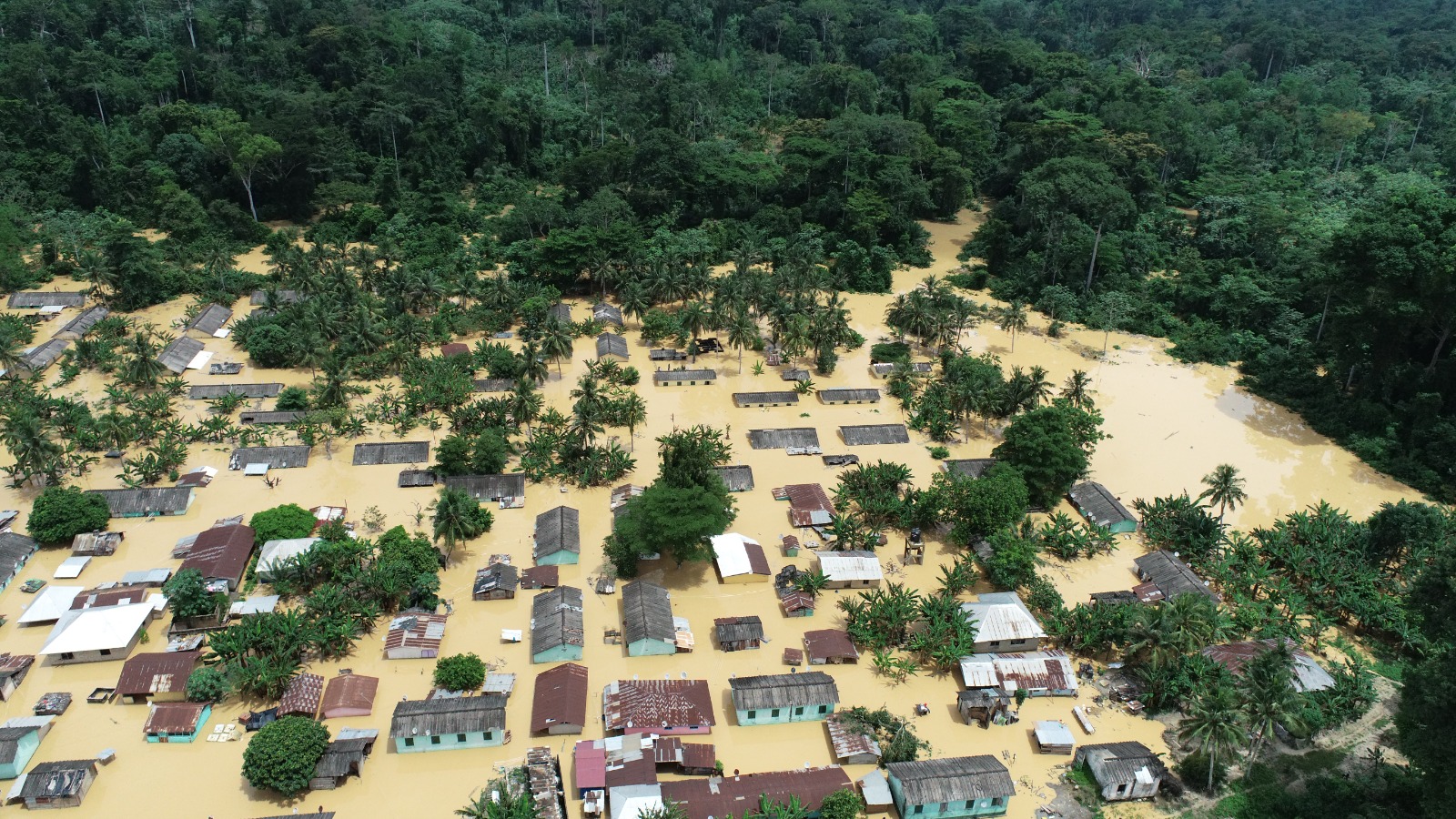
A severe meteorological anomaly has triggered a major structural crisis within the Western Region. Continuous torrential downpours caused both Rivers Samre and Tano to burst their banks, unleashing massive floodwaters across major commercial hubs.
The initial field assessments compiled by the National Disaster Management Organisation reveal that the environmental disaster has completely compromised local architectural safety, causing more than 24 buildings to collapse entirely across the municipal landscape.
The rapid aquatic inundation has temporarily paralyzed daily socioeconomic activities in the affected districts. The rising water levels completely cut off access to vital public infrastructure, submerging local basic schools, residential quarters, and places of worship.
Logic dictates that when major river channels overflow simultaneously, low-lying foundations face severe hydrostatic pressure that can trigger sudden structural collapses. Municipal Director of NADMO Elvis Koffie confirmed that while the extensive physical damage has devastated local livelihoods, emergency protocols successfully prevented any human fatalities.
Significant portions of Samreboi remain entirely under water, with key suburbs including Popolazo, Cocoaase, Clubakyi, Roman Hill, Aboisie, and Nsuoso remaining completely inaccessible to standard vehicular traffic. Displaced families have moved to designated safe zones and temporary administrative shelters.
Terrified residents note that the sheer velocity and volume of this current deluge mirror the historical environmental destruction last witnessed during the severe regional floods of 2017.
Hoping that aged, unreinforced buildings will magically survive a massive double-river overflow is an absolute logical error. While local families are facing an incredibly stressful period waiting for emergency relief supplies, rebuilding homes on the exact same vulnerable floodplains is a cycle that defies structural logic.
True environmental resilience relies on strict adherence to building regulations and relocating away from active waterways. By utilizing these temporary safe zones and cooperating with NADMO field officers during ongoing safety assessments, the community can successfully preserve human lives while engineering teams work out long-term drainage solutions for the municipality.
Also Read: Patrick Boamah Demands Structural Investment and Attitudinal Change to End Accra Flooding