

 By Collins Sarkodieh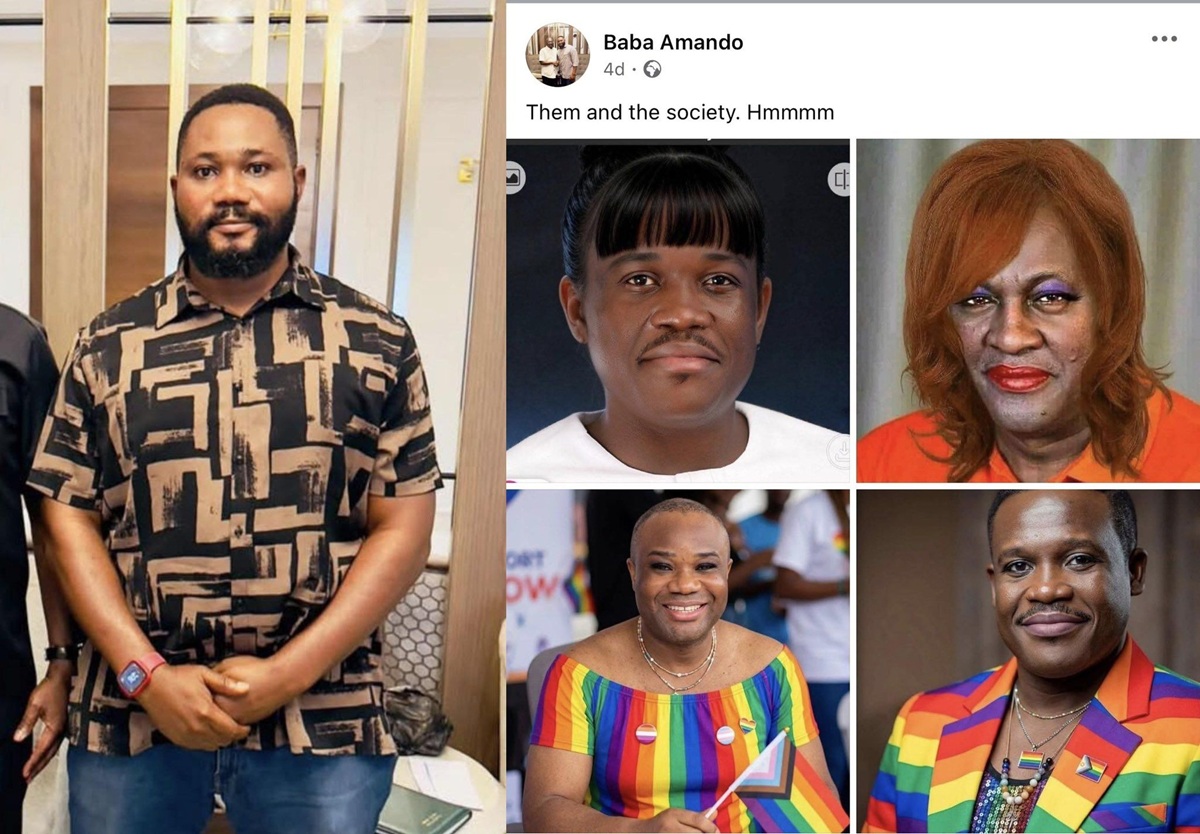
The arrest of Abubakar Yakubu, popularly known as Baba Amando, has sparked a national debate over the boundaries of political satire and the legal definition of “false news” in Ghana.
The Sunyani East NPP Communications Officer was detained by the Criminal Investigations Department (CID) on April 13, 2026, for allegedly publishing misleading content involving President John Dramani Mahama and other high-ranking officials.
Following a two-week remand and a subsequent GH¢30,000 bail grant, Baba Amando has broken his silence, describing his ordeal as a violation of his fundamental human rights and a threat to democratic expression. Speaking on Starr FM, he argued that his posts were merely satirical artworks intended to remind the President of his unfulfilled promises. This case highlights a growing tension between the state’s push to curb misinformation and the opposition’s right to use digital art for political criticism, especially as the nation approaches a critical election cycle.
Why was Baba Amando arrested by the Criminal Investigations Department?
Abubakar Yakubu was arrested following a formal investigation into the publication of digital content that the CID deemed to be “false news” likely to cause fear and alarm or tarnish the image of the presidency. The authorities claim that the artworks and captions shared by Amando crossed the line from political commentary into deliberate misinformation regarding government officials.
Under Section 208 of Ghana’s Criminal Offenses Act (1960), the publication of false news that is likely to cause fear and alarm to the public or disturb the public peace is a misdemeanor. The CID acted on reports that Amando’s specific satirical pieces could mislead the public about the President’s actions or official government policy. However, the defense maintains that the content was clearly marked as satire and that no reasonable person would mistake a digital caricature for a factual news report.
How did the GH¢30,000 bail impact the legal proceedings?
The High Court granted Baba Amando bail in the sum of GH¢30,000 with two sureties after his legal team argued that his continued detention was a breach of the 48-hour constitutional rule. This bail allows Amando to remain free while the state prepares its full case for trial, but it comes with strict conditions regarding his public statements and travel.
Bail in “false news” cases is often set at a significant amount to serve as a deterrent against the repetition of the alleged offense. For Amando, the two-week remand period prior to bail was viewed by the New Patriotic Party (NPP) as a tactical move to silence a vocal communicator. The legal process is now focused on whether the “intent” behind the artwork was malicious or purely artistic, a distinction that will be crucial during the upcoming court sessions.
Is political satire protected under Ghana’s freedom of expression laws?
The 1992 Constitution of Ghana guarantees the right to freedom of speech and expression, which historically includes satire, cartoons, and parody. However, these rights are not absolute and are subject to laws that protect public order, national security, and the reputation of individuals.
The challenge in the Baba Amando case is determining where a “satirical representation” ends and “defamatory misinformation” begins. Satire usually uses exaggeration and irony to critique power, and international human rights standards generally suggest that public figures must have a higher threshold for tolerating such criticism. Amando’s argument that he was merely “reminding the President of his commitments” through art is a classic defense used in free speech cases globally to distinguish between a lie and a joke.
What are the “pertinent national issues” Amando claims the President is ignoring?
During his interview on Starr FM, Baba Amando argued that the state is wasting resources on his arrest while the government fails to address unpaid salary arrears and the struggles of cocoa farmers. He suggested that the presidency’s focus on critics is a distraction from the economic challenges currently facing the Ghanaian populace.
The mention of cocoa farmers is a strategic political point, as the Sunyani area is a major hub for cocoa production. By shifting the conversation from his legal troubles to “unpaid arrears,” Amando is attempting to frame his arrest as a symptom of a government that has its priorities wrong. This narrative has resonated with the NPP base, who argue that the state should be more concerned with the falling price of commodities than with a digital artist’s Facebook posts.
Why did the NPP stage a protest in Sunyani?
The New Patriotic Party organized a massive protest in Sunyani to demand an end to what they describe as “state-sponsored” intimidation of their communicators. The protesters argued that the arrest of Baba Amando and others is a coordinated attempt by the Mahama administration to suppress the opposition’s ability to campaign effectively.
Protesters carried placards accusing the government of using the CID as a tool for political vendettas. These demonstrations are significant because they indicate that the legal case against one man has evolved into a broader regional movement. The NPP leadership has vowed to continue these protests if more communicators are targeted, setting the stage for a tense political atmosphere in the Bono Region and beyond.
Also Read: NPP Communicator Abubakar Yakubu (Baba Amando) Reacts After Bail Denial
Can the “publication of false news” charge hold up against satirical artwork?
Legal experts are divided on whether a digital artwork can be legally classified as “false news” if it is clearly stylized or hyperbolic. For a conviction under Section 208, the prosecution must prove that the accused knew the information was false and that the publication was likely to cause a “disturbance of the peace.”
If the artwork is a caricature—such as an exaggerated drawing of the President—it is difficult to prove that it constitutes a “statement of fact” that could be “false.” However, if the artwork was paired with a caption that made a specific, false factual claim about a government contract or a criminal act, the prosecution’s case becomes much stronger. The outcome of the Baba Amando case will likely hinge on the specific wording of his posts rather than the visual art itself.
What is the “danger to democracy” cited by Abubakar Yakubu?
Amando claims that arresting citizens for their artistic choices is a “danger to democracy” because it creates a “chilling effect” where people become too afraid to criticize the government. He argues that a healthy democracy requires a thick skin from its leaders and a vibrant space for dissent, even when that dissent is presented through satire.
A “chilling effect” occurs when the threat of legal action or imprisonment causes individuals to self-censor. If the state continues to arrest political communicators for digital content, it could lead to a less transparent political environment. Human rights organizations often monitor these cases to see if the “rule of law” is being used to protect the public or to protect the feelings of those in power.
How does this case affect the upcoming election cycle in Ghana?
The arrest of Baba Amando is being viewed as a “test case” for how the government will handle digital communication during the 2026 election season. With social media playing a more central role than ever in Ghanaian politics, the state is under pressure to prevent “fake news” that could incite violence, while the opposition is fighting to maintain its digital reach.
Both major parties—the NDC and the NPP—have heavily invested in “communication teams” that use memes, videos, and artworks to sway public opinion. If the court rules strictly against Amando, it could lead to a massive change in how political parties manage their online presence. Conversely, if he is acquitted, it may embolden more aggressive satirical campaigns across the political spectrum.
What should political communicators learn from the Baba Amando ordeal?
Political communicators are being advised to be more careful with the “factual” elements of their satirical posts to avoid falling foul of the CID. While irony is a powerful tool, mixing satire with unverified allegations can lead to criminal charges that are both expensive and time-consuming to defend.
The legal reality is that while satire is a right, “criminal libel” and “false news” laws still exist on the books in Ghana. Communicators are encouraged to use clear disclaimers when posting parody or satire to ensure there is no “likelihood of public alarm.” The Baba Amando case serves as a warning that the digital world is not a lawless space and that the consequences of a single post can have far-reaching implications for one’s freedom.
Also Read: Nzema Communities Protest Adamus Mining, Issuing Urgent Plea to Lands Minister