

 By Collins Sarkodieh
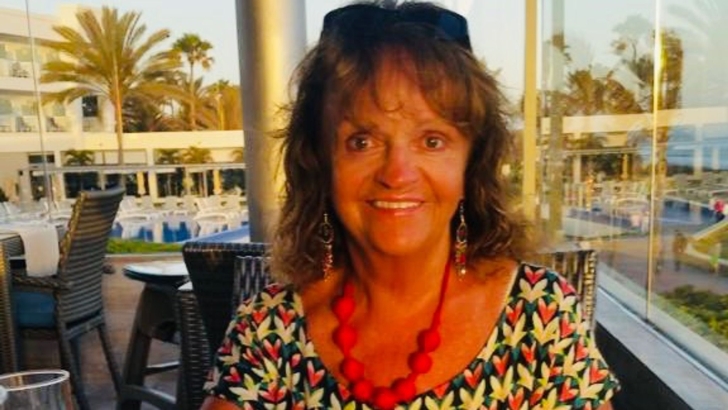
 A devastating inquest at Devon Coroner’s Court has revealed the harrowing final years of Janet Fordham, a 69-year-old widow who lost her life savings, her home, and ultimately her life following a series of sophisticated romance frauds. Mrs. Fordham died in a tragic car accident in Ghana on February 14, 2023, while traveling to marry a man who claimed he could help her recover the £1 million she had lost to previous online scammers.
The hearing painted a grim picture of how a retired housekeeper from Honiton, Devon, was systematically targeted by predators over a five-year period starting in 2017. Despite repeated interventions from her family, the police, and banking institutions, Mrs. Fordham remained “adamant” in her pursuit of love and the recovery of her stolen wealth. Her story serves as a stark warning about the psychological grip of romance fraud and the extreme lengths to which victims will go when they are “brainwashed” by emotional manipulation and the desperate hope of reclaiming their lost future.
How did the £1 million romance fraud against Janet Fordham begin?
The fraud began in 2017 when Janet Fordham met a man on an online dating website who claimed to be a British Army sergeant major stationed in Syria. He manipulated her emotions by claiming they were in love and planning a life together in the UK, eventually tricking her into sending approximately £150,000 under the guise of helping him transport gold bars to Britain.
This initial “military” scam is a classic hallmark of romance fraud, where criminals use high-pressure emotional narratives and heroic personas to build trust. According to testimony from her daughter-in-law, Melanie Fordham, the family warned Janet categorically not to send money, but the grooming was so effective that the transfers continued in secret for years. This first layer of deception stripped Janet of her initial savings and set the stage for a “sunk cost” psychological trap that would haunt her for the remainder of her life.
What methods did the scammers use to bypass banking security?
When UK banks and post offices recognized the fraudulent activity and blocked Mrs. Fordham from using their services, she transitioned to more decentralized and harder-to-track methods such as Bitcoin and international ATMs. She reportedly cashed in her pension and made maximum daily withdrawals of £500 to funnel money to her overseas handlers.
Criminals often coach their victims on how to lie to bank staff or use alternative payment systems like wire transfers and travel agents to circumvent anti-fraud protocols. In Janet’s case, the inquest heard that she used several means to move her life savings and the £140,000 she borrowed from family members. By the time she traveled to Ghana, she had exhausted her home equity, her pension, and her family’s trust, living in a caravan on her son’s property while remaining “in deep” with the scammers.
Who was “Kofi” and how did he lure Janet Fordham to Ghana?
A man named Kofi contacted Mrs. Fordham claiming to be a doctor in Ghana who had discovered her messages in a friend’s mobile phone repair shop. He manipulated her by claiming he knew she had been scammed and promised to help her recover her lost £1 million, eventually entering into a romantic relationship with her to solidify his control.
This “recovery scam” is a particularly cruel secondary fraud where criminals target people who have already been victimized, posing as “helpers,” lawyers, or officials. Kofi convinced the 69-year-old widow that their marriage was the key to unlocking her trapped funds. Despite the Devon and Cornwall Police contacting her in 2017, 2020, and 2022 to warn her against these criminals, Janet flew to Ghana in October 2022, driven by what her family described as a state of being “brainwashed” but legally deemed to have mental capacity.
What were the circumstances of the fatal car crash in Ghana?
Janet Fordham died from a fatal head injury sustained on February 14, 2023, when the car she was traveling in with Kofi left the road and crashed. The pair were reportedly driving from Accra to the Oti region to seek approval from a family member for their impending marriage when the “no third-party” collision occurred.
Detective Sergeant Ben Smith told the inquest that while the crash itself was an accident, it was the culmination of a journey built on lies. Kofi later pleaded guilty to driving offenses in a Ghanaian court and received a suspended prison sentence and a fine. The Senior Coroner for Devon, Philip Spinney, concluded that the widow’s death was a direct consequence of the injuries sustained in the road traffic collision, effectively ending a five-year nightmare of financial and emotional exploitation.
Can families legally stop a relative from sending money to scammers?
In the UK, if an adult is deemed to have “mental capacity,” families and authorities have very limited legal power to stop them from making poor financial decisions, even if those decisions are clearly the result of fraud. Melanie Fordham testified that she spoke to doctors and sought legal advice, but because Janet was “of sound mind,” there was no legal mechanism to prevent her from traveling to Ghana or sending her money abroad.
This is one of the most frustrating aspects for families of romance fraud victims. The “Mental Capacity Act 2005” assumes that individuals have the right to make their own choices, even if those choices seem unwise to others. Scammers exploit this legal boundary by “brainwashing” victims so thoroughly that they view their own family’s warnings as “interference” or “jealousy,” effectively isolating the victim and making them their own worst enemy in the eyes of the law.
Why do romance fraud victims continue to send money after being warned?
Psychologists suggest that victims like Janet Fordham often fall into a “sunk cost fallacy,” where they believe that if they just send “one more payment,” they will finally recover everything they have lost. The emotional trauma of admitting they have been fooled is so great that it becomes easier to keep believing the lie than to face the devastating reality of a ruined life.
In Janet’s case, her daughter-in-law noted that she may have been “in so deep” that she couldn’t accept it was all gone. This psychological phenomenon is a powerful tool for scammers. By the time a victim has lost their home and life savings, the “hope” provided by a new scammer (like the recovery scam offered by Kofi) becomes a lifeline they are unwilling to let go of, regardless of the evidence presented by the police or family.
Also Read: 32 Nigerians Arrested in Ghana For Cyber Fraud
What are the red flags of a “recovery scam” in romance fraud?
A major red flag of a recovery scam is any unsolicited contact from someone claiming they have “found your money” or “identified the scammer,” followed by a request for an “administrative fee” or “legal tax” to release the funds. Real government agencies or banks will never ask for payment via Bitcoin, wire transfer, or ATM withdrawals to return stolen money.
In the Janet Fordham case, the story of finding a phone in a repair shop was a classic “hook” used to establish a false sense of coincidence and trust. Victims should be aware that once their information is on a “sucker list” (a database of successful fraud targets), they will be relentlessly pursued by different criminal cells posing as different characters. Kofi was simply the final character in a long-running play designed to drain the last of Janet’s borrowed resources.
How can the public protect elderly relatives from online predators?
Protection starts with open, non-judgmental conversations about online safety and the reality of “catfishing” on dating sites. Families should encourage the use of “reverse image searches” to check if a suitor’s photos are stolen from the internet and suggest that any request for money—no matter the reason—is a definitive sign of fraud.
- Reverse Image Search: Always check if the “Army Sergeant” or “Doctor” has photos appearing on other websites under different names.
- No Money Policy: Establish a firm rule that no money should ever be sent to someone met online who has not been met in person in a safe, verified setting.
- Banking Alerts: Encourage relatives to set up notifications for large or unusual international transfers.
- Seek Support: If a relative is already a victim, contact Action Fraud or local police immediately, even if the victim is reluctant to cooperate.
What role did the Devon and Cornwall Police play in the investigation?
The Devon and Cornwall Police contacted Janet Fordham on at least three occasions (2017, 2020, and 2022) to persuade her to stop contact with the criminals, but they were unable to take further action because she was making her decisions of her own “free will.” Because she failed to respond to officers or provide statements, the criminal investigations could not be progressed.
This highlight’s a systemic difficulty: police cannot force a victim to be a witness or to stop spending their own money. Detective Sergeant Ben Smith emphasized that the police tried to intervene multiple times, but the “brainwashing” was so effective that Janet prioritized her relationship with the scammers over the professional advice of law enforcement. This lack of victim cooperation is often what allows romance fraud rings to operate for years without being dismantled.
What are the long-term impacts of romance fraud on UK families?
The impact extends far beyond the financial loss; it creates deep rifts in families, leads to the loss of inherited homes, and causes immense psychological distress for the surviving relatives. In the Fordham case, the family not only lost Janet but were also left with the burden of £140,000 in borrowed money and the trauma of her unnecessary death in a foreign country.
Romance fraud is often a “silent” crime, where victims hide their actions out of shame until it is too late. For the Fordhams, the “years of secret transfers” meant that by the time they discovered the truth, the damage was irreparable. The story of Janet Fordham is a call to action for better awareness and perhaps more robust legal protections for vulnerable adults who are being systematically groomed by international criminal syndicates.
Also Read: The Abu Trica Extradition Saga: High Court Grants GH₵30 Million Bail Amid US Fraud Charges
Source – Graphic