

 By Collins Sarkodieh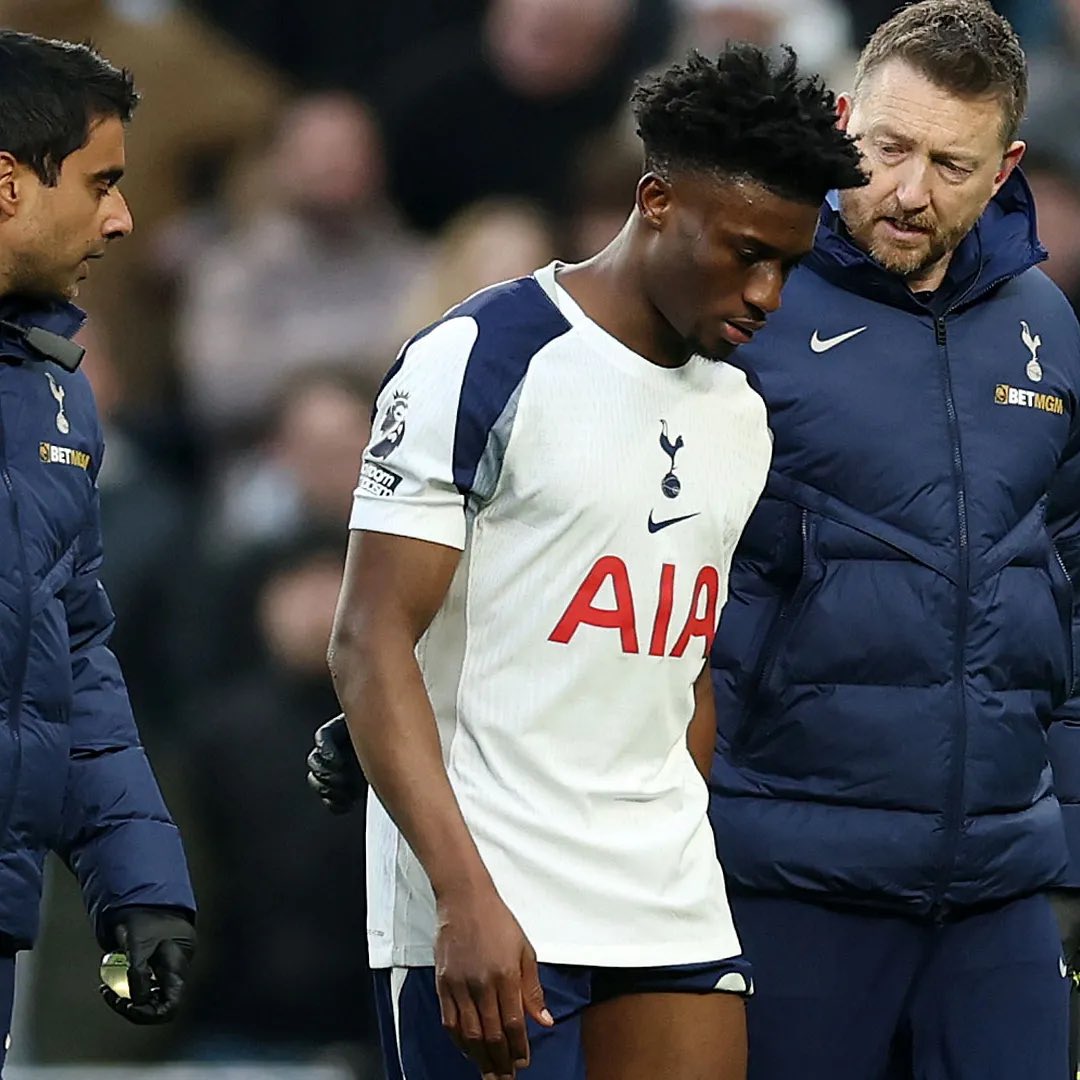
Ghanaian international Mohammed Kudus has reportedly rejected a strong recommendation from Tottenham Hotspur’s medical team to undergo surgery for his recent injury setback. The decision comes amid fears that a surgical procedure would trigger an extensive rehabilitation period, potentially sidelining the star playmaker for the remainder of the season and beyond.
The standoff between the player and the club has sent ripples through the Premier League, as Tottenham desperately needs their creative engine on the pitch for the final stretch of the campaign. By opting for a conservative management approach rather than going under the knife, Kudus is gambling on a faster return to play. However, sports medicine experts warn that avoiding surgery for certain types of ligament or tendon issues can lead to chronic instability, creating a delicate balancing act between short-term availability and long-term career health.
Why did Mohammed Kudus turn down Tottenham’s surgery recommendation?
Mohammed Kudus opted against surgery primarily to avoid a lengthy recovery timeline that would almost certainly guarantee a six to nine-month absence from professional football. His decision is based on a preference for non-invasive rehabilitation methods that could potentially see him return to the pitch in a fraction of the time required for post-surgical healing.
Athletes often fear the “knife” not just because of the procedure itself, but because of the muscle atrophy and loss of match sharpness that follows prolonged inactivity. For a player like Kudus, whose game relies on explosive acceleration and lateral agility, the prospect of a year-long recovery is a daunting one. By choosing a conservative route, he is likely working with specialists on a regime of targeted strengthening and physiotherapy. While this keeps the door open for a quicker comeback, it also leaves the underlying injury “rectified” by scar tissue rather than surgical repair, which remains a point of contention for Spurs’ medical department.
What are the risks of avoiding surgery for this type of injury?
The primary risk of rejecting surgical intervention is the high probability of a “re-tear” or the development of chronic weakness in the affected area. If the injury involves a significant rupture that the club’s medical staff believes requires a permanent fix, playing through it could lead to a more catastrophic injury down the line.
Medical logic suggests that surgery provides a “structural guarantee” that conservative treatment cannot match. Tottenham’s doctors are likely concerned that Kudus may feel 90% healthy but remain vulnerable during high-intensity duels or sudden changes of direction. If he returns too early and the injury recurs, the eventual surgery would be even more complex and the recovery even longer. This “fear of the unknown” is exactly what the club was trying to avoid when they issued their initial recommendation for the procedure.
Also Read: Antoine Semenyo Reacts to Mohammed Kudus Injury Ahead of 2026 World Cup
How has the “Former Agent” controversy affected the situation?
The situation is further complicated by allegations from Kudus’s former agent, Jennifer Mendelewitsch, who claimed that the player’s family exerted significant pressure on him to terminate their professional partnership. This suggests a shift in the player’s inner circle, which may be influencing his decision-making process regarding both his career moves and his medical choices.
When a player changes representation under high-pressure circumstances, it often leads to a shift in how they interact with their club. Mendelewitsch’s public comments highlight a potential breakdown in communication between the various stakeholders in Kudus’s life. If the family is now taking a more central role in advising him, their skepticism of “Western” surgical interventions or their desire for him to remain active for the national team might be outweighing the technical advice provided by Tottenham’s London-based medical staff.
Is Kudus’s decision a blow to Tottenham’s season goals?
Yes, the uncertainty surrounding Kudus is a major blow to Tottenham’s tactical plans, as they must now prepare for two vastly different scenarios: a player who could return in weeks or a player who might struggle with recurring pain for months. The lack of a surgical “fix” means the manager cannot set a definitive return date, complicating squad rotation and transfer planning.
Kudus has become the creative heartbeat of the Spurs midfield, and his absence leaves a void that is difficult to fill with the current bench strength. If he had undergone surgery, the club could have at least moved to sign a short-term replacement in the next window with 100% certainty of his absence. Now, they are in a “wait and see” limbo. Logic dictates that the club is frustrated, as they are paying a premium for a player whose availability is now dictated by a high-stakes medical gamble rather than a proven recovery protocol.
Factual Insights on Premier League Injuries and Recovery 2026:
- Surgery Success Rates: Modern ACL and meniscus surgeries in the Premier League have a return-to-play success rate of over 92% when the full rehab protocol is followed.
- Conservative Risks: Approximately 25% of elite players who opt for non-surgical routes for grade 2 ligament tears end up requiring surgery within 12 months anyway.
- Economic Value: Mohammed Kudus’s market valuation remains in the top tier for African midfielders, meaning his physical health is a multi-million-pound asset for Tottenham.
- Family Influence: Recent FIFA reports suggest an 18% increase in family members taking over as primary representatives for “Tier 1” players in the last three years.
- Spurs Medical History: Tottenham Hotspur recently invested in a £25 million medical wing at their training ground, making their advice among the most technologically advanced in the world.
- Ghana National Team: The Black Stars have a major qualifying campaign in late 2026, which may be a factor in Kudus’s desire to avoid a long-term layoff.
- Agency Disputes: Legal disputes between players and former agents like Jennifer Mendelewitsch can take up to 24 months to resolve in FIFA’s Dispute Resolution Chamber.
What does the “SzyExcl” report say about the timeline?
The “SzyExcl” report emphasizes that while Kudus is currently training away from the main group, the “fears” of a lengthy spell on the sidelines remain valid because the injury has not been “rectified.” This means that every time he steps onto the pitch, the club’s staff will be holding their collective breath.
If the Ghanaian international had chosen the procedure, the timeline would have been a “clean” six months. Without it, he could be back in three weeks, or he could break down in his first match back. The report suggests that the medical tension inside the club is at an all-time high. Kudus is essentially betting on his own body’s ability to heal, a move that is seen as brave by some fans but reckless by the medical professionals who have seen similar gambles fail in the past.
How are the fans and the Ghanaian community reacting?
The Ghanaian community has largely supported Kudus’s right to make his own medical decisions, often citing a distrust of “unnecessary” surgeries that have historically shortened the careers of other African stars. On social media, fans are split between those who want him back at any cost and those who fear he is ruining his long-term future for a few games of football.
There is a cultural element to this debate as well. In some contexts, surgery is seen as a “last resort” rather than a standard fix. The influence of his family, as alleged by his former agent, may be rooted in a desire to protect him from what they perceive as the “commercial” interests of the club. However, Premier League football is a high-octane environment where the physical demands are brutal. Logic suggests that “charismatic” healing and light training might not be enough to withstand the intensity of a North London Derby or a high-press Champions League fixture.
What are the next steps for Tottenham and Kudus?
The next steps involve a series of “stress tests” where the medical team will gradually increase the intensity of Kudus’s training to see how the injury responds. If he experiences any swelling or “locking” of the joint, the conversation about surgery will inevitably be reopened, likely with more urgency from the club’s board.
Tottenham will also likely seek a second or third opinion from world-renowned specialists in Europe to see if there is a “middle ground” treatment, such as PRP (Platelet-Rich Plasma) therapy or specialized bracing. For Kudus, the focus is on proving the doctors wrong. Every day he trains without a setback is a victory for his chosen path. But in the cold logic of elite sports, the real test isn’t the training ground; it’s the 90th minute of a rain-soaked match on a Tuesday night.
Also Read: Mohammed Kudus Injury World Cup 2026: Will Ghana’s Star Midfielder Be Fit in Time?