

 By Emmanuel Bamfo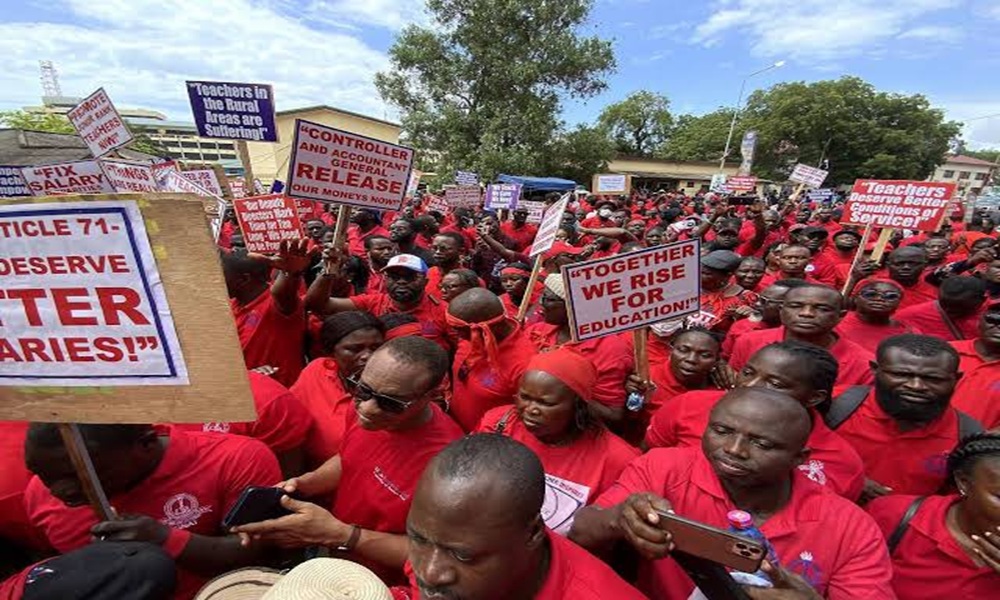
The Ghana National Association of Teachers (GNAT) has advised members of the public and civil society groups to turn their appeals toward government officials. Leadership stresses that instead of pressuring educators to return to classrooms empty-handed, well-wishers should urge state authorities to do the needful immediately.
The firm stance follows a joint nationwide industrial action launched by GNAT, the National Association of Graduate Teachers (NAGRAT), and the Coalition of Concerned Teachers (CCT-GH). Thousands of public pre-tertiary schools remain closed as teachers withdraw services over unpaid allowances and stalled welfare agreements.
Union leaders explain that prolonged government delays in renewing the Collective Bargaining Agreement pushed members to take drastic action. Negotiations were expected to wrap up months ago, but state representatives failed to meet agreed deadlines.
In addition, hundreds of teachers who successfully passed official promotion examinations remain stuck on old salary scales. The unions demand immediate automatic placement on correct pay grades alongside full payment of accrued salary arrears.
Addressing concerns from worried parents and community members, GNAT officials noted that constant appeals directed at teachers miss the actual source of the problem. Educators continue to face harsh economic conditions while waiting indefinitely for legitimate entitlements.
The association maintained that members cannot return to work on empty promises after giving state agencies ample grace periods. Anyone who genuinely desires a quick resolution must urge the Ministry of Education and Fair Wages and Salaries Commission to act swiftly.
The ongoing strike has left thousands of basic and senior high school students stranded across the country. Classrooms remain locked, while final-year students preparing for academic assessments express worry over missed instruction time.
Civil society organizations and student bodies continue urging state negotiators to convene an emergency meeting with union representatives. Fast-tracking the dialogue process remains the only practical path toward restoring normal academic activities nationwide.
Educational experts emphasize that prolonged closures risk destabilizing the national academic calendar and worsening learning losses. The Ministry of Employment, Ministry of Education, and Treasury authorities must prioritize resolving teacher grievances without further bureaucratic roadblocks.
Teachers perform vital frontline duties in building national human capital, and their welfare demands serious administrative priority. Meeting union conditions promptly will safeguard the rights of educators and get Ghanaian children back into active learning environments.
Also Read: UNICEF urges gh30m annual investment for child safety
Source: Ghana News Page