

 By Collins Sarkodieh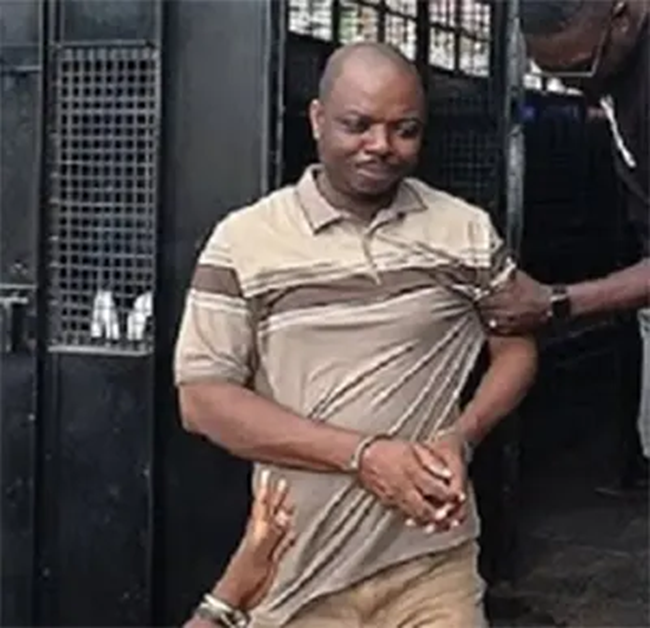
Tension is building around one of Ghana’s most outspoken political figures after Kwame Baffoe, popularly known as Abronye DC, was picked up by the Ghana Police Service for questioning.
Sources within the Criminal Investigations Department indicate that the Bono Regional Chairman of the New Patriotic Party is assisting with investigations linked to a series of public remarks that have stirred controversy in recent days. While officials have not yet laid out formal charges, the situation appears to go beyond routine political commentary.
At the center of the matter are allegations that some of his statements may have crossed into territory considered harmful to public order. Investigators are reportedly examining claims of false publication, incitement, and actions that could potentially trigger fear or unrest among the public. More critically, there are suggestions that certain remarks may have been interpreted as threats toward a judge presiding at the Adenta Circuit Court, a development that has raised concern within legal circles.
This angle has made the case particularly sensitive. In a country where conversations around judicial independence and respect for the courts are already intense, any perceived attempt to intimidate or influence the bench is treated with seriousness. Legal observers say the outcome of this investigation could set an important tone for how public figures engage with the judiciary moving forward.
For many Ghanaians, this incident feels familiar. Kwame Baffoe has built a reputation as a bold and often confrontational voice in Ghana’s political space. His supporters see him as someone unafraid to say what others avoid, especially in defending party positions or challenging opponents. To them, his style is part of the rough and competitive nature of Ghanaian politics.
Critics, however, argue that there is a fine line between bold expression and reckless communication. They believe repeated controversies involving his public statements point to a broader issue about accountability in political discourse. This is not the first time he has had an encounter with law enforcement over similar concerns, with a previous arrest in 2025 still fresh in public memory.
News of his detention spread quickly across Accra and beyond, sparking intense debate both online and offline. Within the political landscape, reactions have been predictably divided. Some within the ruling party are calling for calm, while others privately acknowledge that the situation underscores the need for more measured communication from high-profile figures.
Beyond the individual case, this moment reflects a larger shift happening in Ghana’s public space. The rise of social media and instant communication has amplified political voices, but it has also increased scrutiny. Statements that might once have gone unnoticed now travel fast, attract interpretation, and sometimes trigger legal consequences.
From a governance perspective, this development signals a tightening stance on speech that could disrupt public order. Security analysts note that authorities are becoming more proactive in addressing rhetoric that may escalate tensions, especially in a politically charged environment.
Looking ahead, the next steps will be crucial. The Ghana Police Service is expected to clarify the specific allegations and determine whether the case proceeds to court. For Kwame Baffoe, the outcome could shape not only his political trajectory but also how outspoken figures navigate public discourse in Ghana.
At its core, this is more than just another political controversy. It is a test of boundaries, responsibility, and the evolving relationship between free expression and the rule of law in Ghana’s democracy.
Also Read: Chairman Wontumi Apologises to Mahama, Urges Peaceful Power Transfer to Bawumia (Video)