

 By Emmanuel Fletcher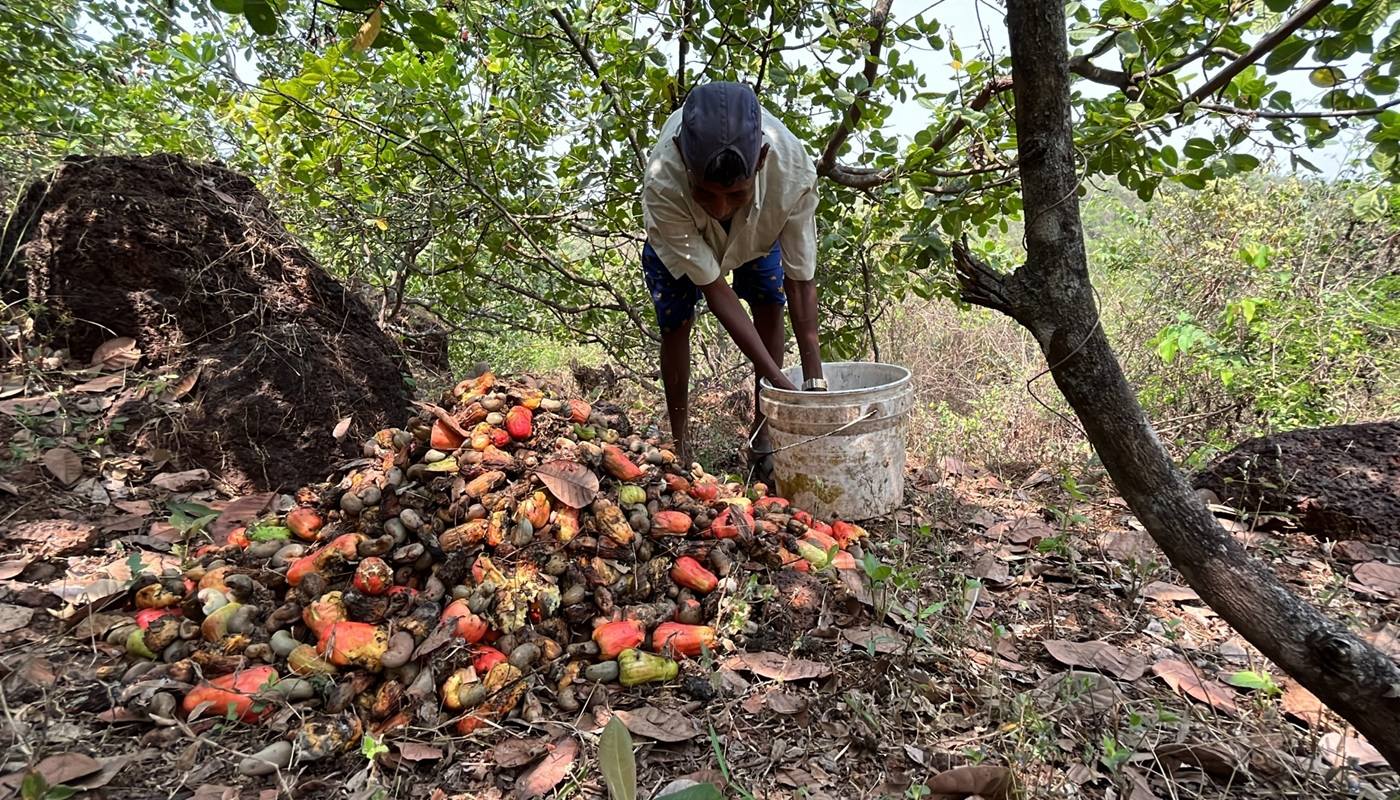
Ghanaian cashew farmers are crying out for immediate government intervention as falling raw nut prices leave rural households in financial distress.
Despite harvesting hundreds of thousands of metric tonnes of quality cashew nuts each season, the nation continues to process less than six percent of its total production locally.
A groundbreaking report by international agricultural consultancy Nitidae, supported by the Association of Cashew Processors of Ghana (ACPG), GIZ, and the European Union, reveals that local factories processed just 15,000 metric tonnes in 2025 out of a total national yield of 262,000 metric tonnes.
The remaining 94 percent of raw nuts leave Ghanaian shores without any local value addition, sending thousands of potential factory jobs and millions in tax revenue directly to processing giants in Vietnam and India.
Extreme Price Volatility Shatters Farm Household Incomes
The lack of a vibrant domestic processing sector leaves hard-working farmers directly exposed to unpredictable international market forces.
In 2025, farm-gate prices started strong at GH¢16 per kilogramme in January and peaked around GH¢20 in February. However, prices collapsed to a painful GH¢7 per kilogramme by May, leaving families struggling to cover basic living expenses.
This price roller coaster is not a new headache for farming communities across the Bono and Bono East regions.
Back in 2023, farm-gate prices suffered an even steeper crash, dropping from GH¢11 per kilogramme in March to GH¢2.80 in May.
Without local processing factories to offer stable purchase contracts, farmers remain at the mercy of foreign buyers who dictate prices at will.
The Export Paradox: Ghana Ships Out More Than It Grows
The Nitidae report exposes a startling paradox in Ghana’s agricultural trade data.
While national production stood at 262,000 metric tonnes, total raw cashew exports reached roughly 444,000 metric tonnes in 2025.
Ghana exported nearly double its national harvest because traders informally imported about 165,000 metric tonnes from neighboring Côte d’Ivoire, Burkina Faso, and Mali to re-export through Tema Port.
This massive trade flow proves that Ghana possesses the strategic geography and port infrastructure to dominate the regional cashew market.
Yet, because the country maintains a liberal raw export regime without supporting local factories, it acts merely as a transit corridor rather than an industrial processing hub.
High Setup Costs and Interest Rates Stifle Local Factories
Setting up a modern cashew processing plant in Ghana requires deep pockets and high risk tolerance.
Building a standard 20,000-metric-tonne processing factory in Ghana costs approximately $9.2 million. In contrast, constructing an identical facility in Vietnam costs just $5.3 million.
Local processors face prohibitive commercial bank interest rates hovering around 20 percent, compared to Vietnam’s modest nine percent.
When you add high industrial electricity tariffs, expensive imported machinery, and strict port clearing charges, Ghanaian processors find it nearly impossible to compete on price against Asian giants.
Currently, Ghana operates only one large-scale industrial cashew plant alongside a few struggling semi-automated facilities.
The ACPG estimates that building ten modern factories could instantly create over 1,200 full-time jobs and 5,000 daily wage positions, transforming rural economies across the middle belt.
Stakeholders Demand Action Under 24-Hour Economy Plan
Association of Cashew Processors President Antonio Manuel Caramelo Raposo insists that every raw nut container shipped overseas represents exported Ghanaian livelihoods.
The ACPG is calling on the government to include cashew processing as an immediate priority under the 24-Hour Economy and Accelerated Export Development initiatives.
Unlike regional neighbors such as Côte d’Ivoire, Nigeria, Benin, and Togo, Ghana currently lacks a dedicated public policy framework to incentivize local cashew processing.
Experts warn against an outright export ban, recommending instead a balanced export levy on raw nuts to fund a Cashew Development Fund, alongside tax exemptions on factory machinery and access to affordable working capital.
Ghana stands at a critical crossroads in its agricultural industrialization journey.
By providing targeted tax relief, cheap credit, and dedicated agro-industrial zones, government can help local processors extract maximum value from raw nuts, cashew shells, and industrial by-products.
Saving the cashew sector is not just about protecting farm-gate prices; it is about building a self-reliant economy that turns local harvests into lasting national wealth.
Also Read: GIPA Calls for Infrastructure Expansion to Cut Post-Harvest Losses