

 By Collins Sarkodieh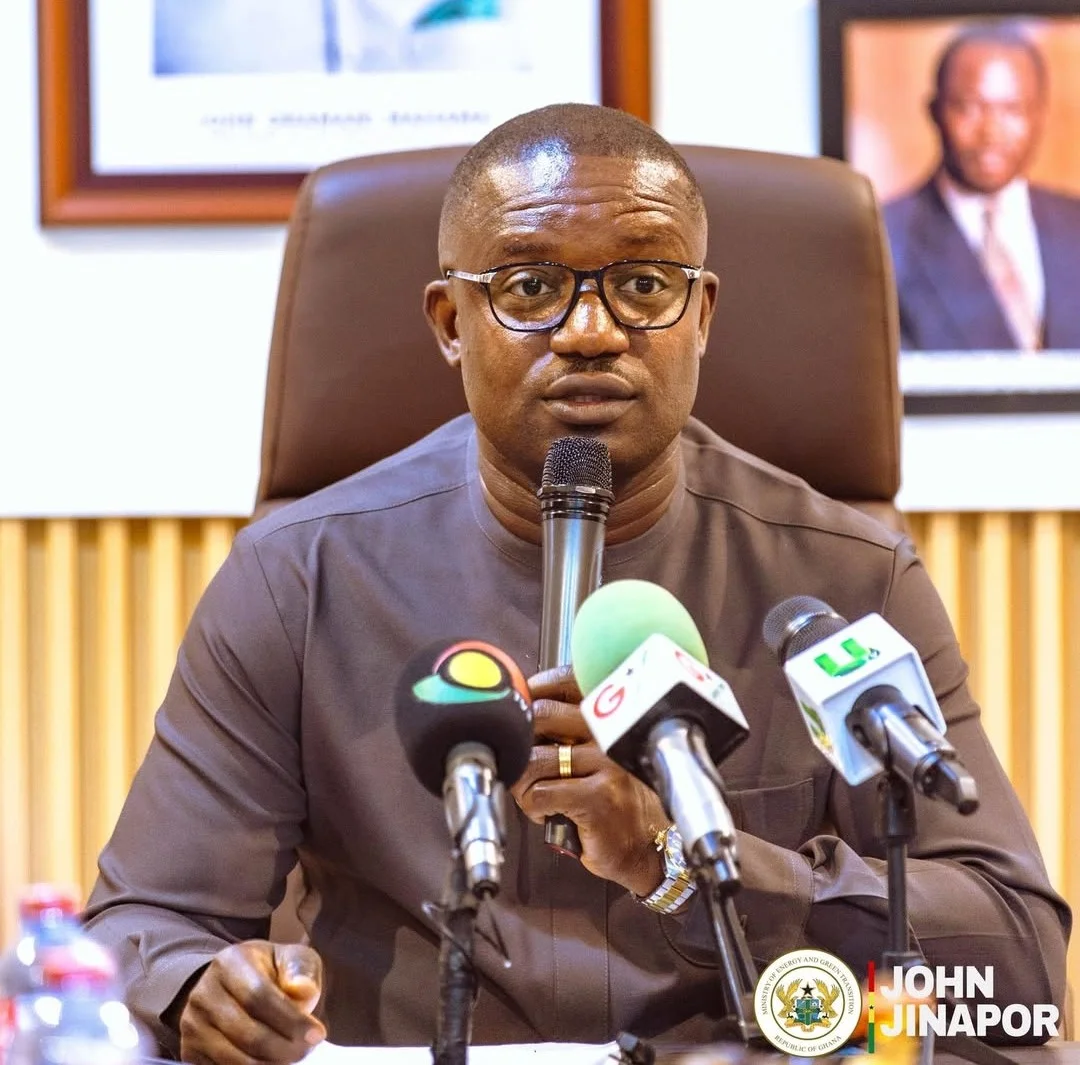
Energy Minister John Jinapor is scheduled to address the nation today, Monday, April 27, 2026, at 2:00 PM to provide critical updates on the electricity distribution sector following a major fire at the Akosombo Power Control Centre. The briefing aims to clarify the government’s strategy for restoring grid stability and to explain the recent administrative shake-ups at GRIDCo and the Electricity Company of Ghana (ECG).
The nation has been on edge following a series of power disruptions that have affected multiple regions, leading to calls for transparency and accountability. Minister Jinapor’s address is expected to be a pivotal moment for the administration as it seeks to reassure the public and the business community that the current “energy emergency” is being handled with technical precision. By providing a direct account of the fire’s impact and the subsequent leadership changes, the Ministry hopes to quell rumors and restore confidence in the national grid’s management.
Why was the CEO of GRIDCo suspended by Minister John Jinapor?
The CEO of the Ghana Grid Company (GRIDCo) was instructed to step aside to facilitate an independent and thorough investigation into the fire outbreak at the Akosombo Power Control Centre. Minister for Government Communications, Felix Kwakye Ofosu, confirmed that this suspension is a procedural necessity to ensure the integrity of the probe into the fire’s cause and its impact on the national electricity grid.
Suspensions in the wake of industrial accidents are standard administrative protocol to prevent any interference with forensic audits. The Akosombo Power Control Centre is the “brain” of Ghana’s hydroelectric power distribution, and a fire there is a matter of high national security. Logic dictates that for a transparent investigation to take place, the leadership under whose watch the incident occurred must yield their positions temporarily. This move signals that the government is treating the potential for technical negligence or sabotage with the utmost seriousness.
What happened during the fire at the Akosombo Power Control Centre?
The fire at the Akosombo Power Control Centre broke out earlier this week, causing significant damage to the sensitive relay and control systems that manage the flow of electricity from the Akosombo Dam to the national grid. This technical failure resulted in immediate and widespread power outages across several regions, as the system’s ability to balance load and supply was compromised.
The control center is vital for monitoring the synchronized delivery of power. When such a facility is damaged, the grid becomes unstable, leading to “tripping” and unannounced blackouts. Engineers have been working around the clock to bypass the damaged sections, but the complexity of modern electrical infrastructure means that full restoration takes time. Today’s briefing will likely reveal the exact percentage of the control system that was lost and provide a timeline for when the “brain” of the dam will be fully operational again.
What are the leadership changes at ECG in the Ashanti Region?
A major leadership shake-up has been implemented at the Electricity Company of Ghana (ECG) in the Ashanti Region to address perceived inefficiencies in power distribution and fault management. This change follows mounting concerns that the region’s technical team was struggling to effectively manage the local grid in the wake of the national disruptions caused by the Akosombo fire.
The Ashanti Region is a critical commercial and industrial hub, and any failure in electricity management there has a massive impact on the national economy. By replacing key officials, the Ministry of Energy is looking to inject “fresh technical oversight” into the region. Logic suggests that these changes are not just about the fire but also about resolving long-standing issues with revenue collection and local infrastructure maintenance that have plagued the region for years.
How will Minister John Jinapor’s briefing impact the “Dumsor” narrative?
Minister Jinapor’s address is intended to provide a fact-based alternative to the “Dumsor” narrative by explaining the specific technical failures at Akosombo and the Ashanti Region. By detailing the “targeted system upgrades” and the specific fire-related repairs, the government hopes to prove that the outages are temporary technical setbacks rather than a systemic return to load-shedding.
While the public remains skeptical, a detailed technical breakdown can help bridge the trust gap. If the Minister can provide verifiable evidence of the repair progress, the logic of “system maintenance” becomes easier for the average citizen to accept. However, the “Winning Language” here must include a definitive end date for the current instability. Ghanaians are less interested in the “who” of leadership changes and more interested in the “when” of consistent power return.
Factual Insights on Ghana’s Power Sector and Akosombo:
- The Akosombo Dam: It is the largest hydroelectric power station in Ghana, with a total installed capacity of 1,020 Megawatts (MW).
- Control Centre Significance: The control center manages the high-voltage transmission lines (161kV and 330kV) that link Ghana’s power plants to the national grid.
- Fire Impact: Initial estimates suggest that the fire disrupted approximately 30% of the grid’s automated monitoring capabilities.
- Ashanti Region Importance: The Ashanti Region accounts for nearly 20% of the total electricity consumed in Ghana, making its management vital for grid stability.
- GRIDCo Role: As the “National Interconnected Transmission System” operator, GRIDCo is responsible for the bulk transport of electricity across the country.
- ECG Role: The Electricity Company of Ghana is the primary distributor of electricity to consumers in the southern and central parts of the country.
- Government Communication: Felix Kwakye Ofosu serves as a key spokesperson for the administration, often clarifying executive decisions via official digital channels.
What steps are being taken to stabilize the national grid?
The government is currently overseeing the installation of temporary mobile control units at Akosombo while the main facility undergoes forensic repair. Additionally, the Ministry of Energy is fast-tracking the “Grid Resilience Project” to create more redundant paths for electricity, ensuring that a single point of failure like a fire does not cause a national blackout in the future.
Stabilizing a national grid is like fixing an airplane while it’s in flight; you cannot simply turn off the power to the whole country to fix one part. The logic of the current approach involves “islanding” certain sections of the grid to protect them from the instability at Akosombo. This is why some areas have power while others don’t. Minister Jinapor’s briefing will likely explain how these technical “islands” are being reconnected as the control systems come back online.
Also Read: The Return of Dumsor: Ghanaians Demand Transparency Amidst Unannounced Power Cuts
Why is the 2:00 PM briefing so critical for the business community?
For the business community, today’s address at 2:00 PM is about risk assessment and financial planning. Manufacturers and SMEs need to know if they should continue to rely on expensive diesel generators or if they can expect a stable supply from the national grid within the week.
Uncertainty is the enemy of investment. When a business doesn’t know if the power will be on, it cannot fulfill orders or manage shifts. Minister Jinapor must speak directly to the “productivity loss” occurring in the Ashanti and Greater Accra regions. By providing a clear, honest assessment of the grid’s health, he allows businesses to make logical decisions about their operations. The “Helpful Content” of his speech must go beyond politics and dive into the economics of energy reliability.
Will the investigation into the GRIDCo CEO lead to criminal charges?
At this stage, the investigation is purely administrative and technical, focusing on whether there were lapses in safety protocols or equipment maintenance. Criminal charges would only be considered if the probe uncovers evidence of deliberate sabotage or extreme criminal negligence, which has not been suggested by official sources like Felix Kwakye Ofosu.
It is important to separate “accountability” from “culpability.” The CEO being asked to step aside is an act of accountability for the organization’s performance. Logic dictates that the government must first understand how the fire started before deciding on any further legal action. The public should expect a summary of the preliminary findings within the next 14 to 21 days, following today’s initial update.
How can Ghanaians stay informed about power updates?
Aside from today’s national address, citizens are encouraged to follow the official social media handles of the Ministry of Energy, ECG, and GRIDCo for real-time updates on local power restoration. The “E-Justice” and “Digital Ghana” initiatives have also made it easier for the government to share push notifications regarding scheduled maintenance in specific neighborhoods.
Information is the best antidote to the frustration caused by blackouts. If you know exactly why your lights are off, you are less likely to fall for misinformation or political spin. Today’s 2:00 PM briefing is a step toward that transparency. Whether you are in the Ashanti Region dealing with leadership changes or in Accra waiting for the Akosombo grid to stabilize, the “logic of the moment” requires patience and an eye on the official channels.
The eyes of the nation are on Minister John Jinapor as he prepares to mount the podium. The fire at Akosombo was a literal and figurative spark that has ignited a broader conversation about how Ghana protects its most vital infrastructure.
As we move forward, the “Winning Language” will be one of resilience and modernization. The energy sector is the backbone of the “24-Hour Economy,” and today’s address is the first step in ensuring that backbone is stronger than ever. The truth may be as hot as the fire that started this crisis, but for Ghana to progress, it is a truth that must be told in full.
Also Read: Power Management: Understanding the ECG Power Outages Across Four Regions on April 22
Do you believe that critical infrastructure like the Akosombo Control Centre should be managed by a private international firm to ensure better safety standards, or should the Ghanaian government continue to maintain full sovereign control through state-owned agencies like GRIDCo?