

 By Emmanuel Bamfo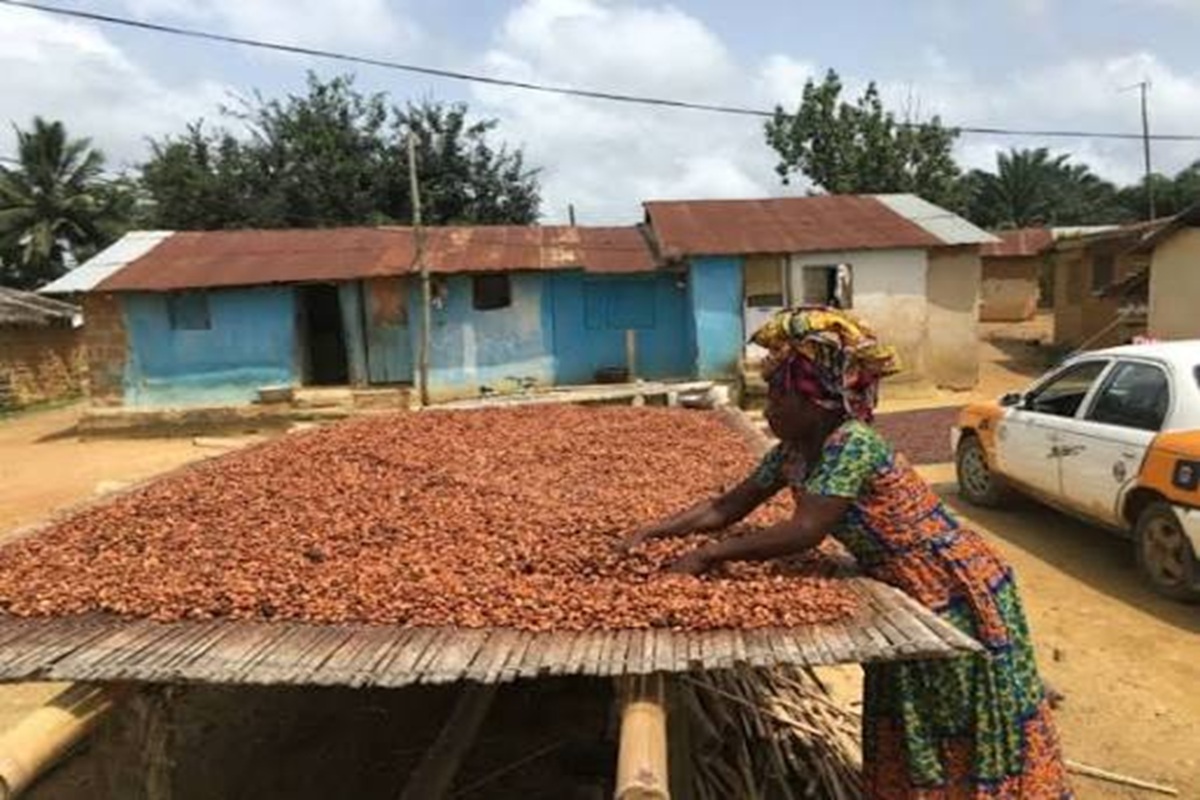
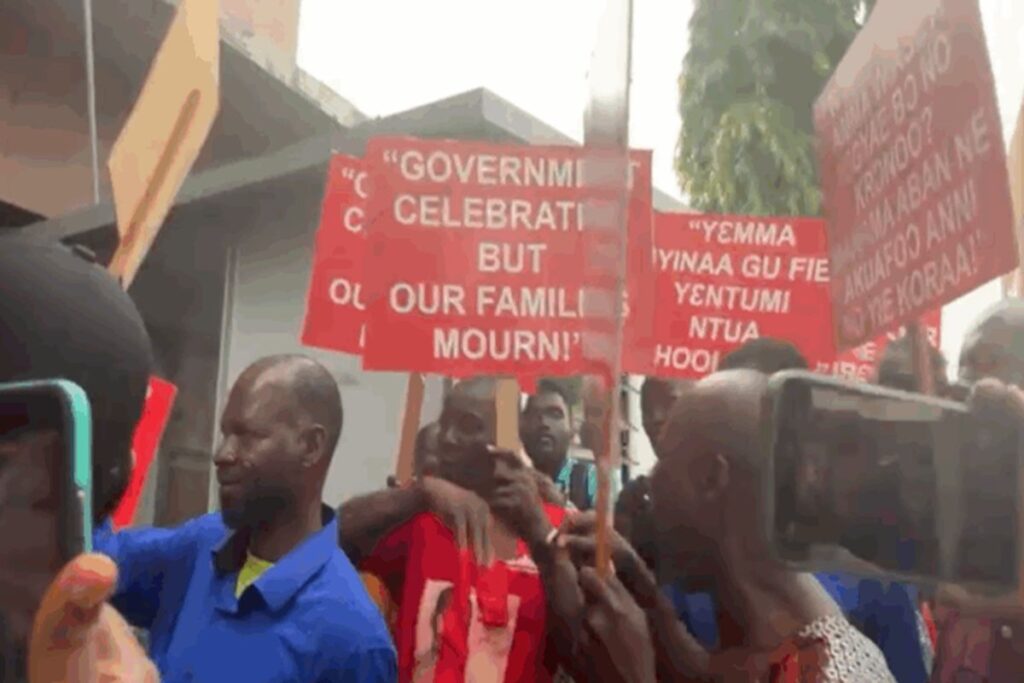
Cocoa farmers from Guan District in the Oti Region stormed the local Ghana Cocoa Board (COCOBOD) office in Hohoe because they have not received a single cedi for cocoa beans supplied between November 2025 and February 2026. Despite official announcements that billions of Ghana cedis were released to Licensed Buying Companies (LBCs), rural farmers in Oti are still holding empty sacks and unpaid receipts.
The anger in Hohoe reached a boiling point when scores of aggrieved farmers marched directly to the COCOBOD premises to demand their hard-earned money. Led by the area Chief Farmer, Divine Katsakpa, the farmers expressed deep frustration over months of broken promises. They handed down a strict three-day ultimatum to government officials and COCOBOD managers. If the outstanding arrears are not cleared immediately, the farmers have vowed to occupy the office continuously or forcibly reclaim their cocoa stock.
This protest is not just about a few delayed paychecks. It represents a massive breakdown in trust between the smallholder farmers who produce Ghana’s golden crop and the state institutions tasked with managing it. For months, these farmers worked under the scorching sun, clearing land, harvesting pods, fermenting beans, and drying them to meet export standards. Yet, when time came to reap the rewards, they were met with total silence from financial managers in Accra.
The core demands of the protesting Oti cocoa farmers include:
- Immediate settlement of all unpaid cocoa arrears dating back to November 2025.
- Full transparency regarding the exact funds released to Licensed Buying Companies.
- A strict three-day ultimatum before peaceful occupation of offices or reclaiming of cocoa stock.
- Better protection against sudden farm-gate producer price drops.
How Long Have Ghana Cocoa Farmers Been Waiting for Their Money?
Most cocoa farmers across the Oti Region, Western North, Ashanti, and Eastern regions have suffered over six continuous months without payment for their crop. Cocoa beans that were weighed, bagged, and handed over to buyers as far back as November 2025 remain completely unpaid well into mid-2026.
Imagine working non-stop for half a year without receiving your salary while your household bills keep piling up. That is the exact reality facing over one million smallholder cocoa farmers across the country. In communities like Akpafu Odomi and across the Guan District, local chief farmer Emmanuel Acquah noted that life has become completely unbearable for rural families. Parents cannot pay basic school fees, healthcare costs are rising unpaid, and farmers cannot even purchase basic inputs or hire farmhands for the upcoming season.
The crisis has also created severe social tension between cocoa farmers and local Purchasing Clerks (PCs). Purchasing Clerks are the front-line agents who interact directly with farmers in the villages. Because COCOBOD failed to reimburse the Licensed Buying Companies, these buyers have no cash to give out. According to Gideon Nyarko, Regional Secretary of the Association of PBC Marketing Clerks for Volta and Oti, several buyers have actually fled their homes out of fear of physical attack from desperate farmers.
| Region Affected | Main Producing Districts | Duration of Payment Delay | Primary Impact on Farmers |
| Oti Region | Guan District, Kadjebi, Jasikan | 5 to 6 Months | Unpaid school fees, lack of farm inputs |
| Western North | Sefwi Wiawso, Sefwi Debiso | Over 6 Months | High debt burden, picketing at COCOBOD HQ |
| Ashanti Region | Tepa, Offinso, Bekwai | 4 to 6 Months | Inability to hire farm labor, local trade slowdown |
| Eastern Region | Suhum, Koforidua, Asamankese | 5 Months | Accumulating interest on informal private loans |
What Is Causing the Massive Cash Delay at COCOBOD?
The payment bottleneck is driven by COCOBOD’s massive structural debt exceeding GH¢32.91 billion combined with severe liquidity hiccups after changing its traditional cocoa financing strategy. Furthermore, a sharp dip in global cocoa market prices caught official planners unprepared.
For decades, Ghana relied on an annual cocoa syndicated loan facility from international banks to pre-finance cocoa purchases before every main crop season. However, institutional restructuring and credit rating challenges forced COCOBOD to pivot toward alternative funding models and buyer pre-financing schemes. Under these new arrangements, Licensed Buying Companies were asked to pre-finance cocoa purchases with the promise that COCOBOD would reimburse them quickly.
Instead of fast reimbursements, LBCs found themselves stranded with over GH¢10 billion in outstanding claims owed by COCOBOD. On top of that, international cocoa prices plummeted from record highs near $7,200 per tonne down to around $4,100 per tonne. Because Ghana reduced its traditional forward-sales strategy from 70 percent down to around 30 percent in hopes of capturing higher spot prices, the sudden market drop created an immediate revenue shortfall. COCOBOD was left scrambling to service a US$481 million debt due during the crop season while simultaneously trying to satisfy local LBC claims.
The major financial bottlenecks currently affecting COCOBOD include:
- International Market Shift: Global cocoa prices dropped steeply from $7,200 to $4,100 per tonne.
- High Institutional Debt: Total structural debt expanded to over GH¢32.91 billion.
- Reduced Forward Contracts: Forward sales dropped from 70 percent down to 30 percent.
- LBC Backlog: Over GH¢10 billion remains owed to Licensed Buying Companies.
- Distribution Breakdown: Released funds stay trapped in urban banking layers instead of reaching rural farmers.
Why Did the Sudden Cocoa Price Cut Make Farmers Even Angrier?
Farmers felt completely betrayed when the government announced a 28 percent reduction in the cocoa farm-gate price from GH¢3,625 per bag down to GH¢2,587 per bag. Expecting to receive full value for beans harvested months earlier, farmers suddenly discovered their delayed earnings were being slashed in real terms.
When cocoa prices were high globally, farmers were urged to increase yield and maintain quality. Yet, as soon as market prices dipped, the burden was immediately shifted onto the smallholder producers. Farmers in Kadjebi and Guan point out that while their earnings dropped by nearly a third, the prices of fertilizers, cutlasses, weedicides, and basic foodstuffs in the market continued to climb rapidly.
The financial shock was doubled because many Purchasing Clerks and farmers had taken high-interest loans from microfinance institutions or local moneylenders to pre-finance farm maintenance. Receiving reduced price payouts six months late meant that interest payments devoured whatever little income was left. Chief farmers across the Oti Region have openly questioned why systemic administrative expenses at COCOBOD headquarters remain untouched while rural farmers are forced to absorb the heavy losses.
How Are Unpaid Arrears Destroying Rural Ghanaian Families?
The failure to pay cocoa farmers on time directly disrupts basic human survival in rural communities, forcing children out of school and pushing vulnerable households into extreme poverty. In Ghana, cocoa is not just an export commodity, it is the primary social safety net for over a million rural families.
In a touching open letter titled “The Cocoa Farmer’s Cry: A Nation’s Backbone Left to Break,” cocoa advocate Yaw Dormacho pointed out that when the cocoa economy falters, it is not a corporate balance sheet that suffers, but a human being in a rural village staring at bills they cannot pay. The Ghana Catholic Bishops Conference also voiced strong concern, declaring that resolving the cocoa payment crisis is a moral imperative. The Bishops warned that six months of non-payment has led directly to child labor, interrupted schooling, rising debt, and deep human suffering.
Chief Farmer Divine Katsakpa shared a painful personal story during the Hohoe protest, revealing that he could not even afford basic medical care for his sick wife or pay his children’s school fees because COCOBOD held back his money. Stories like his are repeated in almost every cocoa-growing village in the Oti Region. When cocoa money stops flowing, local stores lose customers, transport operators lose passengers, and the entire rural economy grinds to a painful halt.
| Key Socio-Economic Metric | Impact of Unpaid Cocoa Arrears | Source & Authority |
| School Attendance | Children sent home due to unpaid school fees | Ghana Catholic Bishops Conference |
| Household Healthcare | Inability to pay hospital bills or buy medication | Oti Chief Farmer Testimony |
| Farm Maintenance | Inability to purchase chemicals or pay labor | Guan District Farmers |
| Local Trade | Severe cash crunch in rural markets | GNA Rural Economy Report |
What Has Government and COCOBOD Done to Settle the Outstanding Bills?
COCOBOD officials insist that billions of Ghana cedis have already been released to Licensed Buying Companies to clear the outstanding backlog. Specifically, COCOBOD reported releasing over GH¢6 billion in November 2025, GH¢5 billion in December 2025, GH¢6 billion in January 2026, and an additional GH¢2.6 billion recently.
Jerome Kwaku Sam, Head of Corporate Communications at COCOBOD, explained publicly that the board is actively disbursing funds to LBCs so they can clear all unpaid balances owed to farmers. Emergency Cabinet meetings were held in Accra, leading Finance Minister Dr. Cassiel Ato Forson to direct the immediate release of funds to stabilize the cocoa value chain. COCOBOD also announced plans to establish a more sustainable long-term financing model to prevent future reliance on expensive emergency loans.
However, there is a massive gap between figures quoted in Accra press conferences and cash delivered to farmers in Oti towns. While COCOBOD claims over GH¢17.6 billion has been paid out since late 2025, local purchasing clerks in Hohoe, Kadjebi, and Bodada report that their bank accounts remain empty. Parliament’s Food and Agriculture Committee raised serious red flags over the administrative red tape preventing money from reaching smallholders quickly.
What Happens If COCOBOD Fails to Pay Oti Cocoa Farmers Immediately?
If the government fails to satisfy the three-day ultimatum, Oti cocoa farmers plan to shut down the Hohoe COCOBOD office, seize stored cocoa beans, and divert future harvests into alternative channels. Furthermore, prolonged payment delays create a massive temptation for cross-border smuggling into neighbouring Togo.
The Oti Region shares a long, porous border with Togo. When Ghanaian cocoa farmers face six-month payment delays and price reductions, smuggling beans across the border becomes an attractive survival strategy. Togolese buyers pay cash on the spot in CFA francs, which hold strong purchasing power. Every bag of cocoa smuggled across the border represents a direct loss of foreign exchange earnings for the Bank of Ghana.
Beyond smuggling, prolonged frustration is driving young people completely away from cocoa farming. Many farm owners are considering leasing their fertile lands to illegal small-scale miners, known locally as galamsey operators. Once a cocoa farm is converted into a galamsey site, the soil is destroyed permanently by heavy chemicals like mercury and cyanide. Protecting cocoa farmers with prompt payments is literally a matter of national environmental security.
The major national risks of unresolved payment delays include:
- Cross-Border Smuggling: Cocoa beans diverted into Togo for immediate CFA franc cash payouts.
- Land Destruction: Cocoa farms destroyed permanently for illegal galamsey gold mining operations.
- Youth Abandonment: Young farmers giving up agriculture to move to urban centers.
- Quality Loss: Stored cocoa beans deteriorating in damp local village warehouses.
How Can Ghana Fix the Cocoa Payment Crisis for Good?
To permanently eliminate payment delays, Ghana must modernize its cocoa supply chain through direct digital payments, strict accountability for Licensed Buying Companies, and comprehensive financial restructuring at COCOBOD.
First, the government should introduce a direct mobile wallet payment system linked to every farmer’s Ghana Card. Instead of routing funds through multiple middleman LBCs and Purchasing Clerks where cash gets stuck in commercial bank accounts, COCOBOD can credit farmers directly upon bean verification. Direct digital payments ensure that when Accra releases money, the farmer’s mobile phone rings instantly with a cash notification in Hohoe or Sefwi.
Second, COCOBOD must enforce strict audits on Licensed Buying Companies. LBCs that receive state disbursements but delay payments to rural farmers must face heavy financial penalties or lose their operating licenses. Finally, Ghana needs to rebuild a robust risk management framework for forward cocoa sales. By hedging price risks effectively and keeping administrative overhead lean, COCOBOD can build a dedicated Stabilization Fund designed specifically to guarantee prompt farmer payments even during global market downturns.
Also Read: ghana security forces battle cyber human traffickers